Ghost ant control from $149. Real expertise from a licensed owner-operator with 25+ years experience. Treats the actual cause, not just the trail. Call 321-704-0434.
Ghost Ant Control
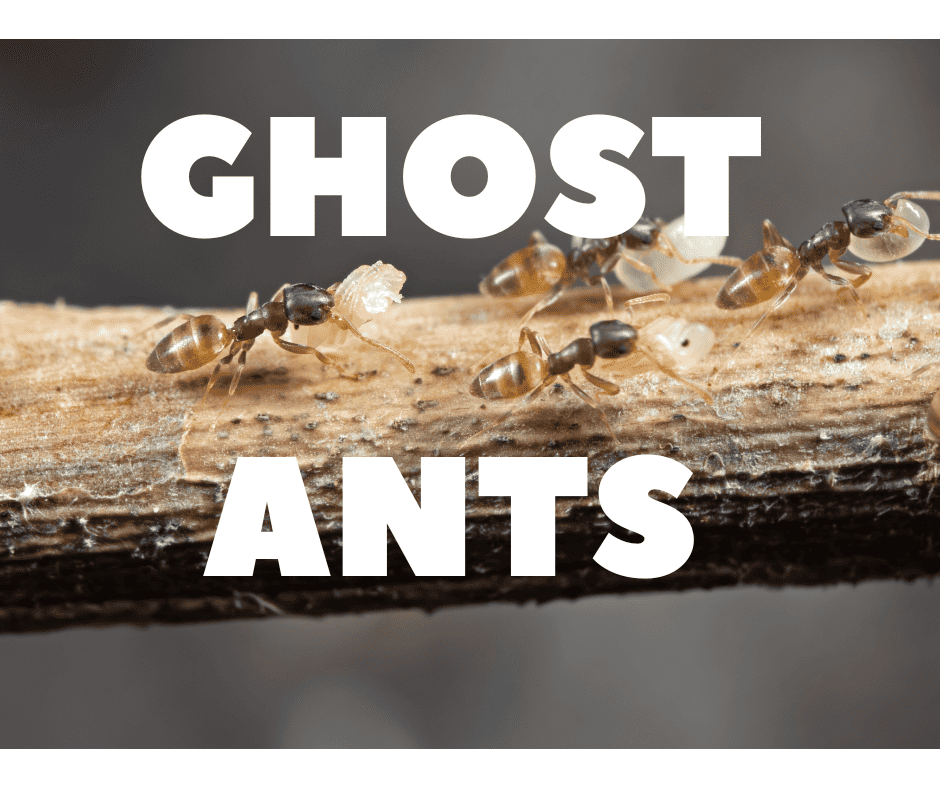
Ghost ants are tiny pale ants with dark heads and clear bodies. They are small enough that most homeowners assume they are some kind of “sugar ant” without realizing ghost ants are their own specific species. You typically see them as a thin trail across the kitchen counter, around the sink, on the windowsill, or coming out of the wall near a plumbing penetration. The trail seems to appear out of nowhere, vanish for a few days, and come back.
If you have ghost ants, you have one of the more frustrating pest problems in Florida to handle correctly. They are not difficult to kill. They are difficult to keep gone. The reason for that is what almost no pest control company explains accurately, and it is the single most important thing to understand about ghost ant control.
The colony you are seeing inside is not the actual colony. It is a subcolony. Ghost ants are what entomologists call polydomous, meaning a single colony spreads across multiple nest sites with workers traveling between them. The main colony is almost always outside, usually in a tree, shrub, palm crown, or in the soil under landscaping near the house. The ants you see inside are just the workers coming in to find food.
Killing the ones inside does nothing about the colony outside. They keep sending more workers. This is why most homeowners end up battling ghost ants for months or years before getting real results.
I have been treating ghost ants throughout Brevard and Indian River County for over 25 years. The treatment that actually works addresses the colony where it lives and removes the reason the ants are coming inside in the first place. Read on for what that looks like, what you can try yourself, and why so many ghost ant treatments fail.
Why Ghost Ants Are Inside Your House
This is the part that matters more than anything else, and it is the reason ghost ant problems are so persistent.
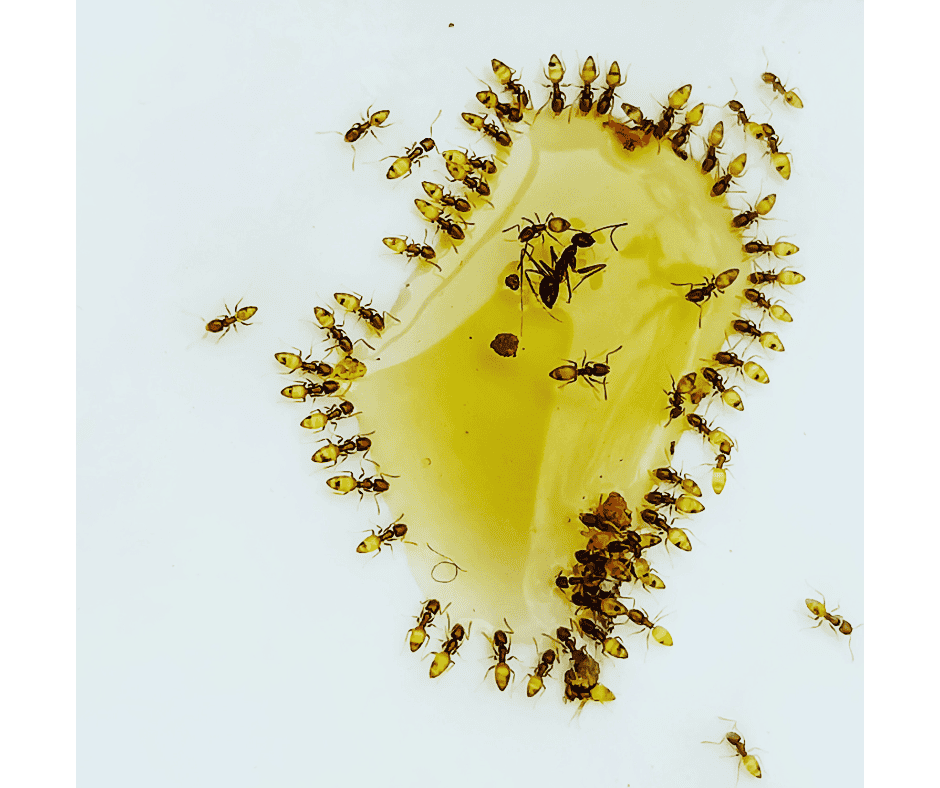
Ghost ants are looking for sugar, and the biggest sugar source in any Florida yard is honeydew. Honeydew is a sugary liquid produced by scale insects, aphids, mealybugs, and whiteflies, the same pests that infest your ornamental plants, palms, citrus trees, and hedges. The plant pests feed on plant sap, process the sugar, and excrete the excess as honeydew. Ghost ants and other sugar-feeding ants follow that honeydew like a free buffet.
A property with healthy, unaffected plants has dramatically lower ghost ant pressure than a property where the plants are quietly infested with scale and aphids. Most homeowners have no idea their plants have scale. The sign is usually black sooty mold growing on the leaves, which is actually a fungus that grows on the honeydew the scale produces.
So when ghost ants are inside, here is what is actually happening: the trees, palms, or shrubs near your house have a scale or aphid problem you have not noticed. The ants are tending those plant pests outside, harvesting honeydew, and coming inside to look for water or additional sugar sources. If you only treat what you see inside, the ants come back. The food source outside is still there.
OUR GHOST ANT CONTROL CUSTOMERS ARE HAPPY – YOU WILL BE TOO!




SCHEDULE YOUR GHOST ANT CONTROL TREATMENT NOW!
What Ghost Ants Look Like
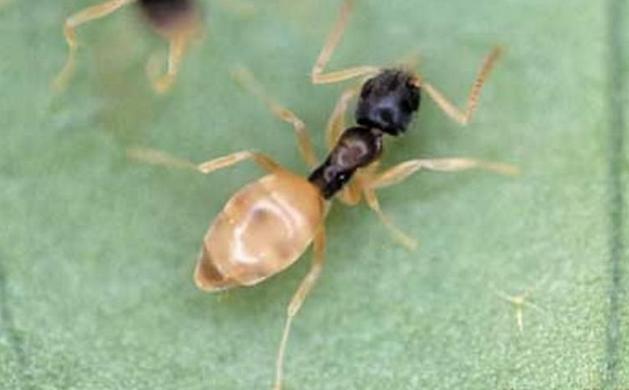
Ghost ants are about 1/16 of an inch long, which is tiny. The thorax and abdomen are pale, translucent, and almost milky white, which is where the name comes from. The head and antennae are darker, usually brown or black, which makes them look like the head is floating because the body is so pale.
They move in thin lines along edges, kitchen counters, around plumbing penetrations, along windowsills, and through bathrooms. They are drawn to water as much as they are to sugar, which is why you often see them near sinks, dishwashers, and drains.
If the ants you are seeing are slightly larger, all dark colored, or moving in a more chaotic pattern, you may be dealing with a different species like Argentine ants or small fire ants. Send me a photo at 321-704-0434 and I will tell you what you have at no charge.
Why Ghost Ants Are Inside Your House
This is the part that matters more than anything else, and it is the reason ghost ant problems are so persistent.
Ghost ants are looking for sugar, and the biggest sugar source in any Florida yard is honeydew. Honeydew is a sugary liquid produced by scale insects, aphids, mealybugs, and whiteflies, the same pests that infest your ornamental plants, palms, citrus trees, and hedges. The plant pests feed on plant sap, process the sugar, and excrete the excess as honeydew. Ghost ants and other sugar-feeding ants follow that honeydew like a free buffet.
A property with healthy, unaffected plants has dramatically lower ghost ant pressure than a property where the plants are quietly infested with scale and aphids. Most homeowners have no idea their plants have scale. The sign is usually black sooty mold growing on the leaves, which is actually a fungus that grows on the honeydew the scale produces.
So when ghost ants are inside, here is what is actually happening: the trees, palms, or shrubs near your house have a scale or aphid problem you have not noticed. The ants are tending those plant pests outside, harvesting honeydew, and coming inside to look for water or additional sugar sources. If you only treat what you see inside, the ants come back. The food source outside is still there.
Effective ghost ant control means treating the plants, not just the trail. This is the single most important thing in this entire article, and it is what separates real expertise from generic pest control.
What Ghost Ants Look Like
Ghost ants are about 1/16 of an inch long, which is tiny. The thorax and abdomen are pale, translucent, and almost milky white, which is where the name comes from. The head and antennae are darker, usually brown or black, which makes them look like the head is floating because the body is so pale.
They move in thin lines along edges, kitchen counters, around plumbing penetrations, along windowsills, and through bathrooms. They are drawn to water as much as they are to sugar, which is why you often see them near sinks, dishwashers, and drains.
If the ants you are seeing are slightly larger, all dark colored, or moving in a more chaotic pattern, you may be dealing with a different species like Argentine ants or small fire ants. Send me a photo at 321-704-0434 and I will tell you what you have at no charge.
What You Can Try Yourself
If you want to take a shot at handling ghost ants yourself before calling, this is the honest version of what works and what does not.
Advion Gel Bait
If you have access to it, Advion ant gel bait is what professionals use. It is a slow-acting protein and carbohydrate bait designed for ants like ghost ants that need to carry the bait back to the colony before it kills them. Place small drops along the trail and near where the ants are entering. Do not place it on top of where they are walking. They will avoid it. Place it just to the side of the trail so they have to investigate.
Advion is not always easy to find at consumer retail stores, but it is available online and through some specialty pest control suppliers.
Terro Liquid Ant Bait
Terro is what most homeowners can find at the local Home Depot, Lowes, or Walmart, and it does work on ghost ants in many cases. It is borax-based liquid ant bait, sweet, and works the same way Advion does, the ants carry it back to the colony where it gradually kills the colony from within.
Here is the part that almost no one tells you. Terro is often too strong for ghost ants at full strength. The ants take a sip, die before they make it back to the colony, and the colony never gets the bait. You see a few dead ants, the trail comes back the next day, and you assume the bait does not work.
The fix is to mix Terro 50/50 with something sugary like regular Coke, fruit juice, or sugar water. Not diet soda. The dilution is gentle enough that the ants survive long enough to make it home and share the bait with the colony, which is how the bait actually does its job. This is one of those tricks that comes from years of fieldwork that you will not find on the Terro packaging.
Place the diluted bait in shallow lids or small dishes near the active trail. Do not wipe up the trail with cleaner first. The pheromone trail is what brings more ants to the bait. Let them carry it.
Wipe Up After, Not Before
Most homeowners’ first instinct is to spray Windex or wipe up the trail. That kills the ants you can see and erases the pheromone trail, but it does nothing for the colony. The colony just sends new scouts that find new routes. Bait first, let the ants take it home for a few days, then clean up.
What Will Not Work Long-Term
Spraying random over-the-counter ant killer at the trail. Sealing entry points without baiting first. Cleaning up the trail without addressing the food source outside. Treating only the inside of the home when the colony is in a tree in the front yard. Repellent products that just drive the ants to find a new entry point.
When DIY Is Not Working
If you have tried bait and the ants keep coming back, the situation is almost always one of these:
- The bait is old. Terro that has been sitting in a drawer for a year or more loses effectiveness. If the bait is dark brown or reddish instead of clear and pale, throw it out and buy fresh.
- The ants you are seeing are not actually ghost ants. Small fire ants, big-headed ants, and a few other species look similar at a glance but do not respond to sweet baits the same way. If the ants are ignoring the sweet bait or you are only seeing a few at it, you may have something else.
- The bait is going back to a small subcolony, not the main one. Remember ghost ants spread across multiple nests. Baiting one entry point might wipe out a subcolony while the main colony in the tree keeps producing more workers.
- The plants around your house have scale or aphids. This is the most common reason. Until the food source outside is addressed, the colony has every reason to keep sending workers to your house. This is why I treat the trees, palms, and shrubs around the home as part of every service. Treating only the ants you can see is solving the wrong problem.
How I Treat Ghost Ants Professionally
When you call me for ghost ant service, here is what actually happens:
- Inspection of the inside trails and the outside source. I look at where the ants are coming in, follow the trail back as far as I can, and inspect the trees, palms, shrubs, and ornamental plants near the home for scale, aphids, mealybugs, and sooty mold. Almost every time, the source is in the landscaping.
- Treatment of the plants producing honeydew. This is the part most pest control companies skip. I treat the scale insects, aphids, and mealybugs on the affected plants. Once those plant pests are eliminated, the honeydew goes away. Once the honeydew goes away, the ants have no reason to be there.
- Treatment of the colony locations. Ghost ants nest in palm crowns, in the leaf litter around shrubs, in the soil under landscaping, and sometimes in wall voids or attic spaces. I treat the nest sites I can find directly with the appropriate product for the location.
- Targeted interior baiting. Where the ants are coming inside, I place professional bait at the entry points. The bait carries back to whatever subcolonies are inside the structure and eliminates them.
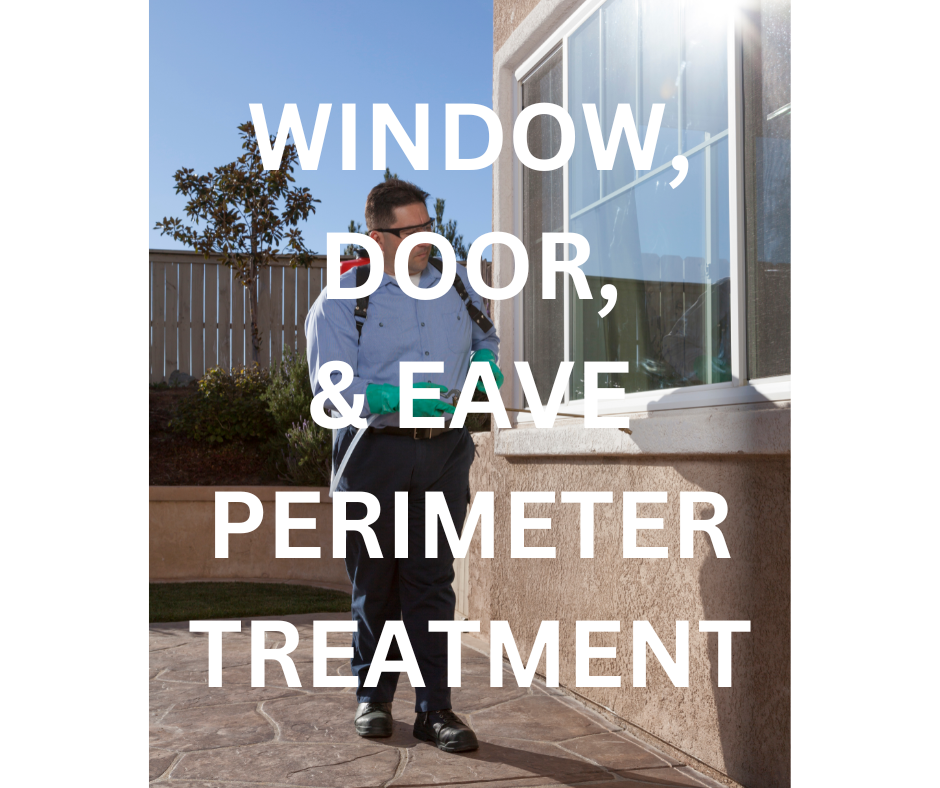
- Exterior perimeter treatment. I treat the foundation, soffits, and around windows and doors to create a barrier that ghost ants cannot cross to get inside.
The treatment is comprehensive because ghost ant control has to be comprehensive. Cutting corners on any one of these steps is why most ghost ant problems come back.
Pricing
| Service | Price |
|---|---|
| Ghost ant treatment | Starting at $149 |
| Quarterly pest control with ghost ants covered | Starting at $99 |
| Combined pest control and lawn care | Starting at $150 every 6 weeks |
If you have ghost ants as a one-time problem, the standalone treatment handles it. If you have recurring ant issues in general, the quarterly pest control service treats the plants as part of every visit and keeps ghost ant pressure managed year-round.
Seniors and active military receive 10% off. Free callbacks if covered pests return between visits.
Why Florida Has Such a Bad Ghost Ant Problem
A few reasons specific to this area.
Florida’s climate keeps ornamental plants growing year-round, which means scale and aphid populations stay active year-round. There is no winter dormancy that gives the plants a chance to recover. The plant pests just keep producing honeydew, which keeps ghost ant colonies fed and active.
The plants we love to landscape with, palms, hibiscus, citrus, ixora, gardenias, are some of the most scale-prone plants in horticulture. Almost every Florida yard has a few plants that are quietly infested.
Ghost ants are an invasive species originally from Africa or Asia and they have thrived in Florida’s climate. They establish quickly, spread across multiple nests, and outcompete native ant species.
The barrier island and coastal communities are particularly bad for ghost ants because the lush tropical landscaping and humidity create ideal conditions year-round. I treat ghost ants throughout Brevard and Indian River County, but the call volume is consistently highest from Melbourne Beach, Indialantic, Indian Harbour Beach, Satellite Beach, Cocoa Beach, Vero Beach, and Indian River Shores.
How much does a Ghost Ant Treatment Cost?
A ghost ant Treatment Cost starts at $149.00.
Step-by-Step DIY Guide
For homeowners who want a detailed walkthrough of how to handle ghost ants yourself with specific products, baiting techniques, and troubleshooting, I have written a comprehensive guide on PestLenz that walks through the entire process step by step.
The guide covers product recommendations, application techniques, common mistakes, and what to do when DIY is not working. If you want to try handling it yourself before calling, that is the resource I would point you to.
FAQ’s; Ghost Ant Control Treatment/ Sugar Ant Control
General Ghost Ant Control Questions
Ghost Ant Treatment
Ghost Ant Prevention
Cities And Towns We Provide Ghost Ant Control Service
We proudly provide pest control & termite control services to these communities.
RELATED LINKS; Tiny Ants
https://entnemdept.ufl.edu/creatures/urban/ants/ghost_ant.htm
https://en.wikipedia.org/wiki/Tapinoma_melanocephalum
https://entnemdept.ufl.edu/creatures/urban/ants/ghost_ant.htm