
Argentine ant control from $179. Real expertise from a licensed owner-operator with 25+ years experience. Treats the actual cause, not just the trail. Call 321-704-0434.
Argentine Ant Control
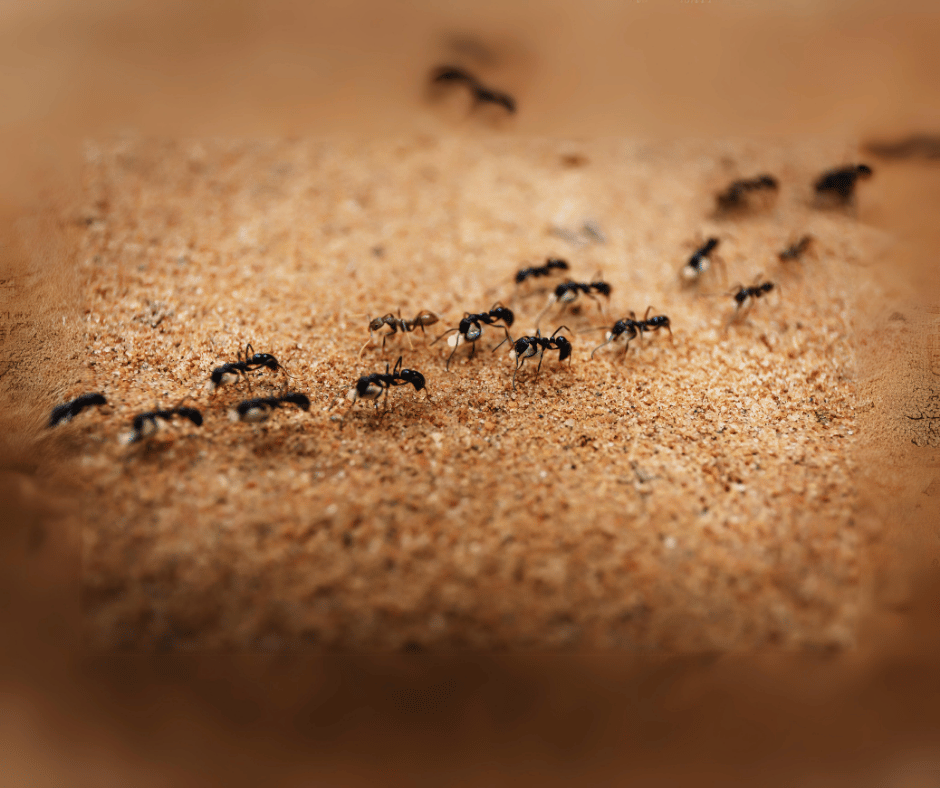
Argentine ants are the worst of all the small ant problems Florida homeowners deal with. Not because they bite (they do not), not because they damage property (they do not directly), but because of how they organize. Argentine ants do not have separate colonies that compete with each other the way most ant species do. They form what entomologists call supercolonies, single interconnected colonies that can span entire neighborhoods with millions of workers all cooperating across multiple yards and even multiple blocks.
When Argentine ants show up in your house, the colony you are dealing with is not a small group living in a tree in your yard. It may literally be the same colony as the one in your neighbor’s yard, and the one across the street, and the one three houses down. This is why Argentine ant infestations feel relentless. Killing the ants you see does almost nothing to the supercolony, which simply sends more workers from another part of the network.
That makes Argentine ant control fundamentally different from any other ant treatment. You are not trying to eliminate one colony. You are trying to apply enough sustained pressure on a sprawling, interconnected network that the workers stop coming to your house.
I have been treating Argentine ants throughout Brevard and Indian River County for over 25 years. The approach that actually works is comprehensive and addresses every component of why the ants are there. Read on for the field experience, what you can try yourself, and why so many Argentine ant treatments fail.
Why Argentine Ants Are in Your House
This is the most important section of this page. The supercolony explains the scale of the problem, but the reason they specifically came to your yard and your house is almost always the same.
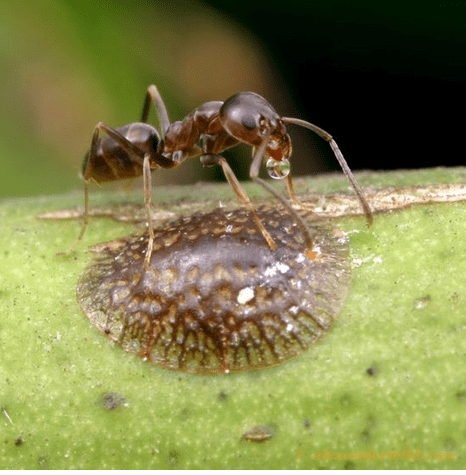
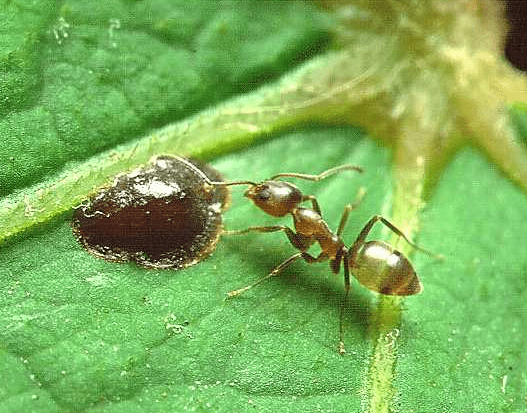
Argentine ants follow honeydew. Honeydew is the sugary liquid produced by scale insects, aphids, and mealybugs that infest your ornamental plants, palms, citrus trees, and shrubs. The plant pests feed on plant sap, process the sugars, and excrete the excess as honeydew. Argentine ants actively farm these plant pests, protecting them from predators in exchange for the steady supply of honeydew.
When you see Argentine ants on your property, there is almost always a plant or several plants with an active scale or aphid infestation that is feeding the colony. The plants may look fine to you. The signs are subtle, small bumps along the stems of plants for scale, sticky residue on leaves or under trees, and most visibly black sooty mold growing on the leaves of affected plants. The sooty mold is actually a fungus that grows on the honeydew the scale produces.
A property with healthy unaffected plants has dramatically lower Argentine ant pressure than a property where the plants are quietly producing honeydew. Most homeowners have no idea their plants have scale. That is why Argentine ant problems persist year after year despite repeated indoor treatment, because the food source outside has never been addressed.
The Hungry Argentine Ants Problem
Here is something almost no other pest control company will tell you, and it matters.
If you treat your plants for scale and aphids without addressing the ant colony itself, you will end up with a much worse short-term ant problem than you started with. When the plants stop producing honeydew, all of those Argentine ant workers who were tending the plants and farming the scale insects suddenly have no food source. They do not just go away. They get hungrier and more aggressive, and they spread out looking for new food sources. Many of them come into your house.
This is why a homeowner who buys a bag of systemic granular at the garden center and applies it to their plants often calls me a week later with an Argentine ant invasion that is dramatically worse than what they had before. They eliminated the food source without doing anything to the colony, and the colony responded by sending more workers further into the home to find food.
The correct approach is to address the ants and the scale at the same time. Treat the colony directly, treat the plant pests producing honeydew, and put down baits to give the workers something to take back to the colony as the food source disappears. Done right, you get rid of the ants permanently. Done wrong, you make the problem worse.
This is one of the main reasons professional treatment matters for Argentine ants. The sequencing and the comprehensiveness of the work is what makes the difference between resolving the problem and making it worse.
What Argentine Ants Look Like
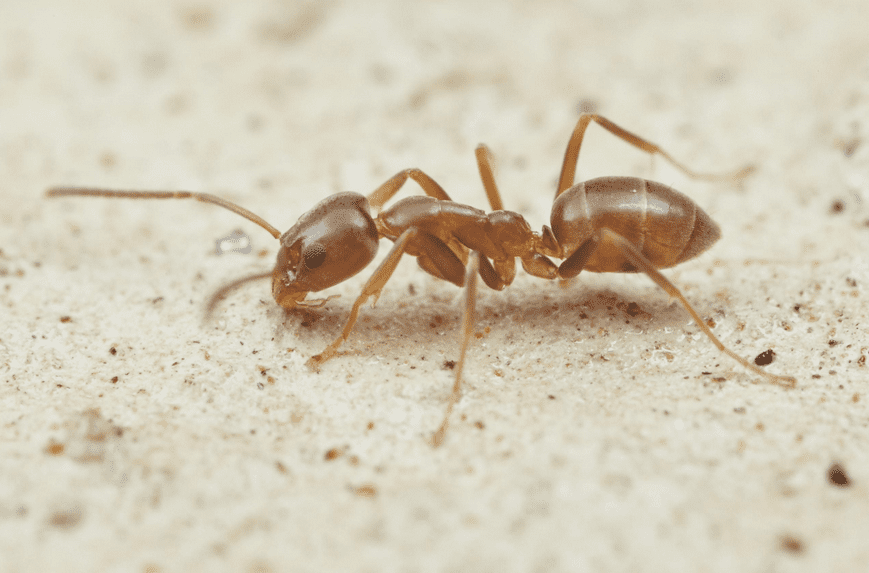
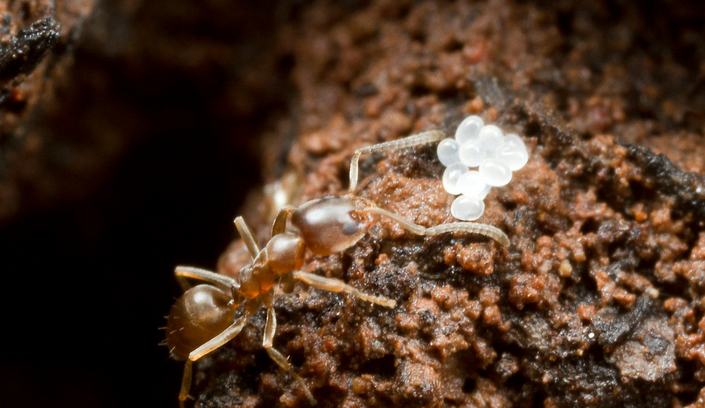
Argentine ants are small, about 1/8 inch long, with a uniform medium to dark brown color. They have a single node between the thorax and abdomen, which is a detail that distinguishes them from a few other species. They do not bite or sting and they do not have a particularly noticeable odor when crushed.
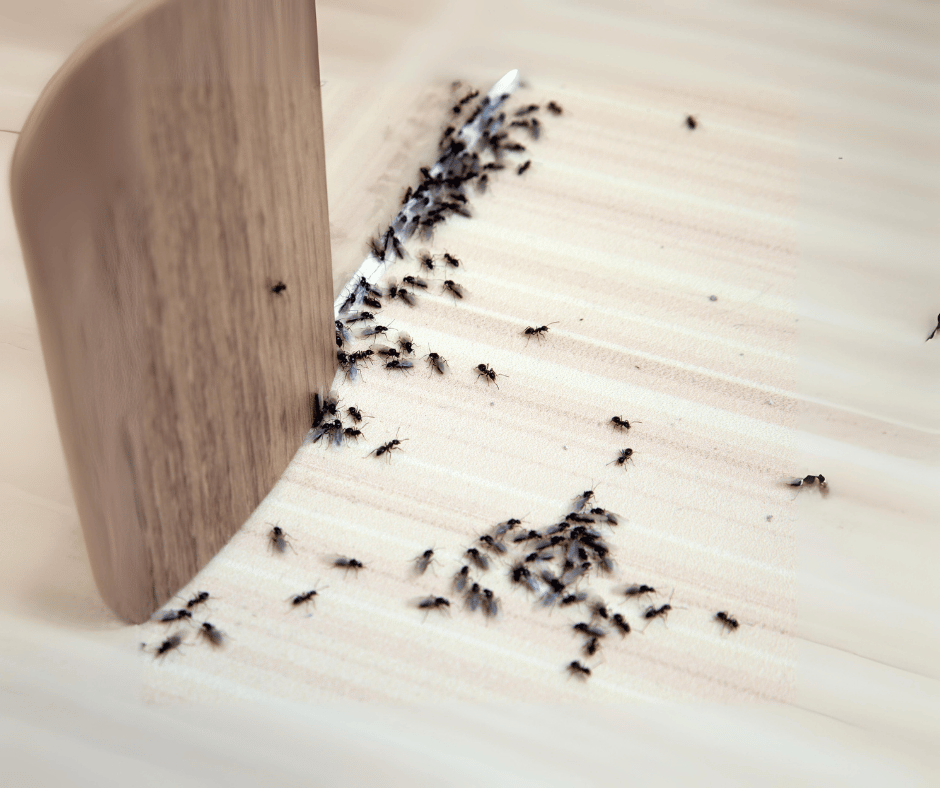
You typically see them in long, well-organized trails. Unlike ghost ants which trail in thin lines, Argentine ant trails are usually wider and contain larger numbers of workers all moving in both directions along the same path. The trails often follow the edges of sidewalks, foundations, baseboards, and counter edges. When they find a food source they recruit aggressively, and you can go from seeing one ant to seeing hundreds within hours.
If the ants you are seeing are darker, smaller, or moving more erratically, you might be dealing with a different species. Send me a photo at 321-704-0434 and I will tell you what you have at no charge.
What You Can Try Yourself
If you want to take a shot at handling Argentine ants yourself before calling, here is the honest version.
Advion Ant Gel Bait
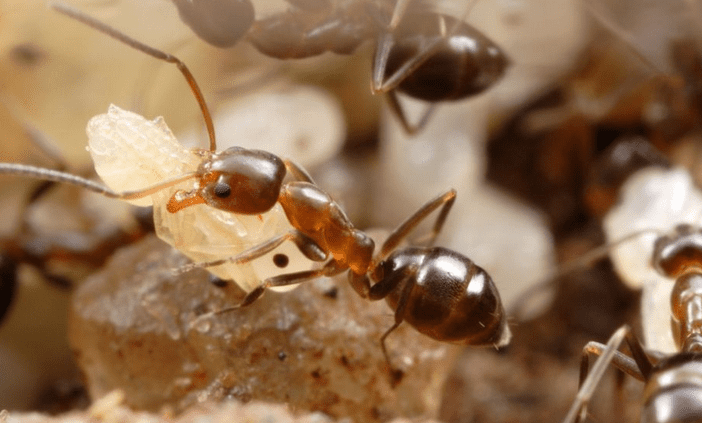
This is what I would use, and what I would recommend. Advion ant gel bait is a protein and carbohydrate bait designed for sugar and protein feeding ants. It works slowly enough that workers carry it back to the supercolony and share it through trophallaxis, the food-sharing behavior ants use to feed each other and the queens.
Place small drops of Advion near the trails, near entry points, and in areas where you have seen ant activity. Do not put the gel directly in the path. Put it just to the side so the ants have to investigate. Do not spray the trail with anything else after baiting. The point is to let the workers eat the bait and carry it home. Spraying disrupts that.
Advion is not always easy to find at consumer retail stores. It is widely available online and through specialty pest control suppliers. It is also what most professionals use.
Why Plain Terro Often Fails on Argentine Ants
Terro liquid ant bait can work on Argentine ants, but it is less reliable than on ghost ants. The issue is that Argentine ants are larger and feeding on a wider variety of food sources, including a lot of protein from farming scale and aphids, so they are less consistently drawn to pure sugar bait. If you try Terro and it does not work, that does not mean baiting is hopeless, it means you need a more attractive product like Advion.
What Will Not Work Long-Term
- Spraying random over-the-counter ant killer at the trail. This kills what you see and does nothing to the supercolony. The ants come back the next day.
- Sealing entry points before baiting. The ants are already inside and will just find new ways in. Bait first.
- Treating only inside the house. The supercolony is outside. Inside treatment alone will never solve it.
- Killing the scale without baiting the ants. As discussed, this makes the problem worse.
- Hoping it goes away. Argentine ant supercolonies are persistent and growing. They will not just resolve themselves.
Trim Back Landscaping
Tree branches and shrub limbs that touch the house are direct highways for ants. Trim back any landscaping that contacts the structure. This alone will not solve the problem but it makes other treatment more effective.
Address Moisture
Argentine ants like cool, moist environments. Standing water from a leaky spigot, AC drain line dripping at the foundation, or oversaturated landscaping all attract them. Fix obvious moisture issues as part of any treatment plan.
How I Treat Argentine Ants Professionally
When you call me for Argentine ant service, the work is comprehensive because the problem requires it.
- Step one is the trees and plants. I show up and start by treating the trees, palms, shrubs, and ornamental plants on the property. This addresses both the colony’s nest sites in the landscaping and the plant pests producing the honeydew. This is where the food is and where most of the workers are. Treating the perimeter of the house first while leaving the food source untouched is fighting with one hand tied behind your back.
- Targeted baiting at the active trails. I place professional bait where the ants are actively moving. The bait carries back to the colony as the food source from the plants begins to disappear, eliminating the colony from within rather than just driving the ants somewhere else.
- Perimeter treatment of the home. Foundation, soffits, around windows and doors, and any entry points. This creates the barrier that prevents re-entry once the colony has been impacted.
- Optional attic dusting. For homes where Argentine ants have made it into the attic or wall voids, the Delta Dust attic treatment I include in standard pest control service handles the overhead component that perimeter treatment cannot reach.
- Inspection for conducive conditions. I identify any moisture issues, landscaping problems, or structural issues that are contributing to the problem and tell you what to address. Sealing entry points after the colony is impacted is part of preventing re-establishment.
The treatment is designed to be done in a single visit for most homes, and the ants should be substantially gone within 24 hours. Full elimination of the supercolony’s pressure on your property typically takes a few days to a week as the bait works its way through the network.
Pricing
| Service | Price |
|---|---|
| Argentine ant treatment | Starting at $179 |
| Quarterly pest control with Argentine ants covered | Starting at $99 |
| Combined pest control and lawn care | Starting at $150 every 6 weeks |
The Argentine ant treatment is higher than the basic pest control service because of the comprehensive tree and plant treatment that has to happen alongside the standard pest control work. For most homes the treatment resolves the problem in a single visit.
If you have ongoing ant pressure or want continuous protection, the quarterly pest control service covers Argentine ants along with all other common Florida household pests and includes the plant treatment at every visit, which keeps the food source addressed continuously rather than just once.
Seniors and active military receive 10% off. Free callbacks if covered pests return between visits.
What My Customers Have To Say




Schedule Your Argentine Ant Treatment Now
Why Florida Has Such a Bad Argentine Ant Problem
Several factors specific to Florida and our coastal communities.
Argentine ants are not native to North America. They came from Argentina, originally on shipping containers carrying coffee, and have spread throughout the warmer regions of the United States. Florida’s climate is essentially perfect for them. Year-round warm weather means continuous colony growth with no winter dieback to slow them down.
The lush tropical landscaping in Florida yards provides ideal habitat for the scale insects and aphids that feed the colonies. Hibiscus, ixora, gardenias, palms, and citrus are all common scale hosts, and they are all common in Florida landscaping.
The barrier island and coastal communities have particularly bad Argentine ant pressure because the humidity, dense landscaping, and consistent warm temperatures create year-round breeding conditions. I treat Argentine ants throughout the area, but the highest call volume is from Melbourne Beach, Indialantic, Indian Harbour Beach, Satellite Beach, Cocoa Beach, Vero Beach, and Indian River Shores.
Once an Argentine ant supercolony establishes itself in a neighborhood, it tends to stay. The colonies do not have internal competition that would limit their spread, and they outcompete native ant species. Many Florida neighborhoods have had the same persistent Argentine ant pressure for decades.
Step-by-Step DIY Guide
For homeowners who want a detailed walkthrough of how to handle Argentine ants yourself with specific products, baiting techniques, and troubleshooting, I have written a comprehensive guide on PestLenz that covers the full process.
How Do I Get Rid of Argentine Ants? Complete Guide
The guide covers product recommendations, the right way to bait, the sequencing of treating the colony versus treating the plants, and what to do when DIY is not working. If you want to try handling it yourself before calling, that is the resource I would point you to.
Argentine Ant FAQ
Everything you need to know to keep your home ant-free—for good.
GENERAL ARGENTINE ANT QUESTIONS
ARGENTINE ANT TREATMENT OPTIONS
ARGENTINE ANT PREVENTION – THE MOST IMPORTANT SECTION
https://entnemdept.ufl.edu/Creatures/urban/ants/Argentine_ant.htm