

The best way to get roaches out of your car is a professional firewall treatment that combines a liquid insecticide with an IGR, killing every roach and sterilizing the survivors so they can’t breed back, all in one visit with 9 months of protection.
Starting at $199
Professional roach treatment for cars, trucks, RVs, boats, and semi-trucks. Owner-operated service that comes to your home or workplace. Serving Brevard and Indian River County for over 25 years.
Car Roach Treatment Starting at $199
Finding a roach in your car is one of those moments that changes how you feel about your vehicle. It is not just gross. It is the realization that there are probably more you have not seen, and that whatever is in there has been riding around with you every day.
Roaches in cars are more common in Florida than most people realize, and they are a real problem beyond just the discomfort. German cockroaches in particular are notorious for getting into circuit boards and fuse boxes, shorting out electronics, and chewing through the soy-based wiring that most modern vehicles use. A roach infestation that goes untreated long enough can cause electrical damage that totals a car.
I have been treating vehicles for roaches across Brevard and Indian River County for over 25 years. One visit, flat pricing, and I come to you.
Call or text 321-704-0434 or book online below.
How the Treatment Works
What I Treat
I treat cars, trucks, SUVs, RVs, boats, and semi-trucks. If it has an interior where roaches can hide, I can treat it.
Where I Meet You
I come to your home or your workplace. I prefer not to treat vehicles in public parking lots, and here is why: after treatment, your vehicle needs at least an hour to dry with the windows cracked slightly. A workplace parking lot is generally a safer place to leave your windows cracked for a few hours than a public lot. If a public location is what works for you, that is fine, just plan for the drying time before you close everything up and drive away.
The Treatment Itself
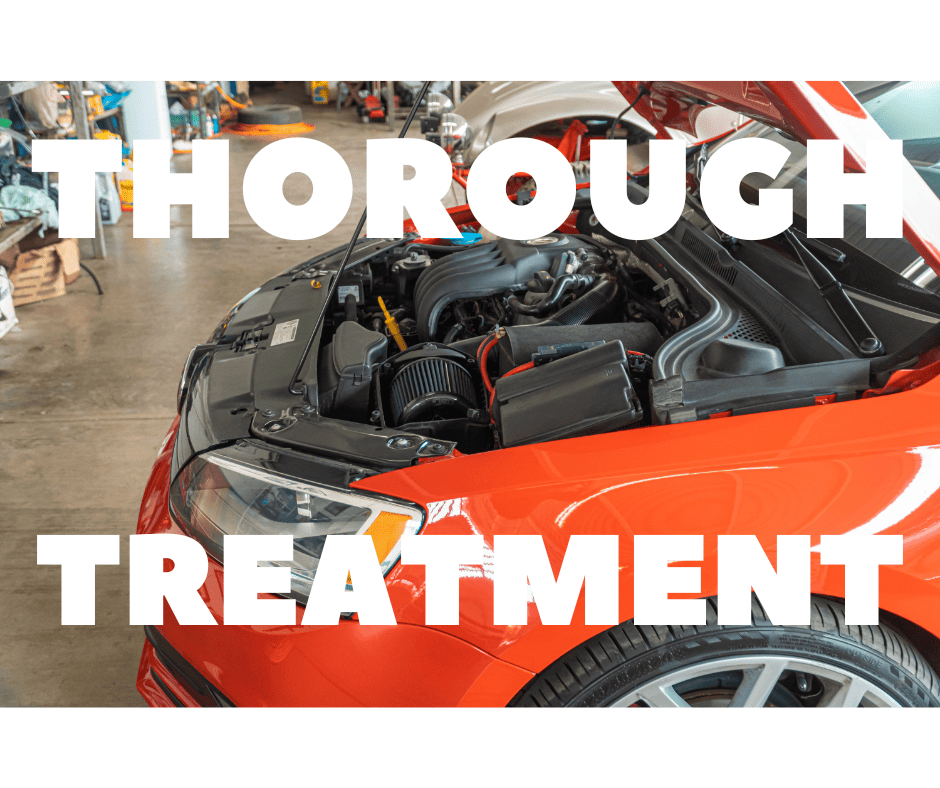
I start with a thorough inspection to locate every area where roaches are hiding. In a vehicle that usually means under and between seats, inside air vents and the dashboard, in the trunk and glove box, under floor mats, and anywhere else they have found a dark, warm spot to nest.
The treatment combines two approaches. First, I apply a professional-grade liquid insecticide to the interior of the vehicle, targeting all active harborage areas. Second, I use Insect Growth Regulators, or IGRs, which work by disrupting the roach’s development cycle. IGRs prevent juvenile roaches from ever maturing into breeding adults, which collapses the colony from within rather than just knocking back the population temporarily. Together, these two products eliminate the active infestation and provide up to nine months of protection.
For tight cracks, crevices, vents, and areas the liquid cannot fully penetrate, I use Delta Dust, the same waterproof insecticidal dust I use for attic treatments. It gets into the spaces where roaches are actually nesting and keeps working long after the visit.
The treatment dries in about 15 to 20 minutes, though I recommend leaving the windows cracked for at least an hour before closing the vehicle up completely.
What to Know About Surfaces
The liquid treatment is safe for most vehicle interiors, but I avoid spraying directly onto leather seats and real wood trim, the same way you would avoid getting those surfaces wet. I will work around those areas and use Delta Dust where needed instead. If your vehicle has a lot of leather or wood interior, just mention it when you book and I will plan accordingly.
No Odor
The treatment is odorless. There is nothing to air out beyond the standard drying time.
How Roaches Get Into Vehicles
Roaches are opportunists and vehicles give them a lot of ways in.
Parking near restaurants, dumpsters, or under parking lot lights at night is one of the most common ways it happens. The insects swarming those lights at night include a lot of roaches, and a pregnant female finding her way into your car through an open window or door gap is all it takes to start an infestation.
They also hitch rides in grocery bags, cardboard boxes, luggage, thrift store finds, and camping gear. If you have ever transported someone else’s belongings or given a lot of rides to people you do not know well, that increases your exposure. Ride share drivers are particularly vulnerable for this reason. German cockroaches travel in passengers’ belongings and move from vehicle to vehicle without anyone noticing until the population is already established.
Used vehicles are another common source. I once bought a used truck from a dealer in Melbourne and discovered weeks later it was full of German roaches. It happens at dealerships just like anywhere else.
One thing worth knowing: if your car has roaches, they can and will transfer into your home or workplace on your clothing and in your bags. Treating the vehicle and the home at the same time is the most complete solution.

This powerful mix not only eliminates active pests but also includes an IGR that sterilizes the roaches, permanently ending their breeding cycle. Just give your car a good vacuuming, and we can handle the rest, fixing the problem for good.
Why DIY Treatments Do Not Work
Bug bombs are the most common thing people try first, and they are not effective for vehicle infestations. Roaches detect the fumes and retreat deep into vents, dashboard cavities, and upholstery until it clears. Bug bombs have no residual effect, so once the fumes dissipate there is nothing stopping roaches from coming right back out. They cannot penetrate the tight, dark spaces where roaches actually nest and lay eggs.
Store-bought sprays have the same problem. They kill what they contact on the surface and leave everything else untouched. In a vehicle full of hidden cavities, that is not enough.
Professional treatment reaches every part of the vehicle, including the places you cannot see, and the IGR component keeps working for months after the visit.
Pricing
| Service | Price |
|---|---|
| One-time car roach treatment | $199 |
| Re-treatment within 6 months | $100 |
No hidden fees, no upsells. If roaches come back within six months, re-treatment is $100.
Out-of-Area Service
I am based in Brevard County but I will travel anywhere in Florida. For locations outside my normal service area, the treatment price plus round-trip drive time at $120 per hour applies. A 50% deposit is required before I leave for long-distance appointments.
CLICK HERE TO VIEW COUNTY BY COUNTY OUT OF AREA PRICING
| County | Price |
|---|---|
| Brevard | $199 |
| Indian River | $199 |
| Orange | $499 |
| Osceola | $439 |
| Volusia | $439 |
| Seminole | $559 |
| Lake | $679 |
| Polk | $559 |
| Martin | $439 |
| Palm Beach | $727 |
| Broward | $847 |
| Miami-Dade | $919 |
| Hendry | $920 |
| Glades | $779 |
| Manatee | $959 |
| Sarasota | $959 |
| Pinellas | $959 |
| Hillsborough | $959 |
| Lee | $1,059 |
| Collier | $1,179 |
| Keys (Upper / Middle / Lower) | $1,399 / $1,879 / $2,239 |
How to Prepare Your Vehicle
Getting the most out of the treatment starts before I arrive.
Vacuum the interior thoroughly, paying close attention to under the seats, along the edges of floor mats, and in the trunk. When you are done, empty the vacuum bag or clean the canister outside and away from your home. Do not bring a vacuum full of roaches into the house.
Remove trash, food wrappers, and clutter so I can reach every area of the interior. If you suspect any clothing or soft items inside the car may be carrying roaches, run them through a hot dryer cycle before the appointment.
Keeping Your Car Roach-Free After Treatment
A few habits make a significant difference in preventing roaches from coming back.
Never leave food in the vehicle. Even a few crumbs under the seat or a forgotten fast food bag in the back is enough to attract roaches. Keep snacks and groceries in sealed containers if you need to transport them. Vacuum regularly and pay attention to the areas under seats and along floor edges where crumbs collect.
Be mindful of what you bring into the car. Cardboard boxes, thrift store items, camping gear, and grocery bags are all common ways roaches get in. Check bags and boxes before loading them.
If you park in a garage, keeping the garage sealed reduces the chance of roaches migrating into the vehicle from outside.
Be thoughtful about parking. Staying away from dumpsters, restaurant loading areas, and parking under bright lights at night reduces your exposure significantly.
Want to Handle It Yourself?
If you are outside my service area or just prefer to tackle it on your own, I put together a complete step-by-step guide that walks through exactly what to do, which products to use, and the order to do it in.
Cities and Towns We Serve:
Car Roach Treatment FAQ’s
Pest & Lawn Organic Guard | Brevard & Indian River County
Understanding the Problem
What caused the roach infestation in my car?
There are several ways roaches get into vehicles, and sometimes it really is just bad luck. If you bought the car used, the infestation may have been there before you ever drove it off the lot. You may have transported someone or something carrying roaches without knowing it. Camping gear, cardboard boxes, thrift store finds, and grocery bags are all common ways roaches hitch a ride into a vehicle. Many of the insects swarming parking lot lights at night are roaches, and a single pregnant female finding her way in through an open window or door gap is enough to start a full infestation. Florida’s warm, humid climate does the rest.
Can roaches actually damage my car?
Yes, and the damage can be serious enough to total a vehicle. German cockroaches in particular are drawn to the warmth of electronics and will get into circuit boards and fuse boxes, causing shorts and electrical failures. Most modern vehicles use soy-based wiring insulation, which roaches will chew through given enough time. Electrical repairs from a roach infestation can easily run into thousands of dollars. Treating the problem early is far less expensive than dealing with the damage later.
Are roaches a sign that my car is dirty?
Not necessarily. Florida roaches are opportunists. A clean, well-maintained vehicle parked near a dumpster or under a parking lot light at night is just as much of a target as any other. That said, food wrappers, crumbs, and clutter do make your car more attractive and give roaches a reason to stay once they get in.
Can I confirm whether I actually have roaches before calling?
Yes. Place a couple of insect glue traps inside the vehicle overnight, one under the front seat and one in the trunk. If roaches are active, you will catch them. That is the simplest way to confirm an infestation before booking a treatment.
What kinds of roaches and other pests get into cars in Florida?
German cockroaches are the most common and the most problematic in vehicles. Large roaches including American and Smoky Brown cockroaches also show up, particularly in vehicles parked near vegetation or left sitting for extended periods. Ants are common too. Ghost ants, fire ants, Argentine ants, and white-footed ants all infest vehicles regularly here in Brevard and Indian River County.
Do I have a higher risk of roaches if I drive for a ride share app?
Yes. The more people riding in your vehicle who do not live in your home, the higher your exposure. German cockroaches travel in passengers’ belongings and transfer from one vehicle to another without anyone noticing until the population is established. Ride share drivers should inspect their vehicles regularly and consider routine preventative treatments.
If my car has roaches, can they get into my house?
Yes. Roaches will hitch a ride on your clothing, in your bags, and in anything you carry out of the vehicle. If your car has an active infestation, treating the home at the same time is the most complete solution and prevents the problem from cycling back and forth.
About the Treatment
How do you treat roaches in a car?
I start with a thorough inspection to locate every area where roaches are hiding, which in a vehicle typically means under and between seats, inside the dashboard and air vents, in the trunk and glove box, and under floor mats. I then apply a professional-grade liquid insecticide targeting all active harborage areas, combined with Insect Growth Regulators, or IGRs. IGRs prevent juvenile roaches from maturing into breeding adults, which collapses the colony from within rather than just temporarily reducing the population. For tight cracks, crevices, and vents where the liquid cannot fully penetrate, I use Delta Dust, a waterproof insecticidal dust that gets into the spaces where roaches are actually nesting and keeps working long after the visit.
How long does the treatment take?
The application itself takes about 15 minutes. You should plan for at least an hour of drying time before closing the windows completely.
How long before I can drive my car again?
About an hour. The products need time to dry fully before you close the vehicle up. I recommend leaving the windows cracked slightly during that time to allow everything to settle properly.
Will there be any odor in my car after treatment?
No. The products I use are completely odorless. There is nothing to air out beyond the standard drying time.
Will the treatment damage my car’s interior?
The liquid treatment is safe for most vehicle surfaces. However, I avoid spraying directly onto leather seats and real wood trim since those surfaces can be damaged by moisture, the same way they would be damaged by water. For those areas I use Delta Dust instead, which is dry and non-staining. If your vehicle has a lot of leather or real wood interior, mention it when you book and I will plan accordingly.
How long does the protection last?
Up to nine months from a single treatment. The combination of the liquid insecticide and the IGR component continues working well after the visit, preventing new roaches from establishing themselves in the vehicle.
What if roaches come back after treatment?
Re-treatment within six months is $100. If you are seeing activity after the initial service, call me and we will take care of it.
Before Your Appointment
Are there any steps I should take before the treatment?
Yes, and doing these things will make the treatment significantly more effective. Vacuum the interior thoroughly before I arrive, paying close attention to under the seats, along the edges of floor mats, and in the trunk. When you are done vacuuming, empty the bag or clean the canister outside away from your home, not inside. Do not bring a vacuum full of roaches into your house. Remove trash, food wrappers, and clutter from the vehicle so I can reach every area of the interior. If you suspect any clothing or soft items inside the car may be carrying roaches, run them through a hot dryer cycle before the appointment.
Do I need to be present during the treatment?
You should step out of the vehicle while I am working, but you do not need to stay nearby. I just need access to the car.
Scheduling and Location
Where do you meet customers for car treatments?
I come to your home or your workplace. I prefer not to treat vehicles in busy public parking lots because after treatment your vehicle needs at least an hour to dry with the windows cracked slightly, and a workplace or home is a safer place to leave your windows open for that long than a public lot. That said, if a different location works better for your situation, we can work something out. Just keep the drying time in mind when choosing a location.
Which cities in Brevard and Indian River County do you serve?
I serve Palm Bay, Suntree, Viera, Rockledge, Cocoa Village, Merritt Island, Cape Canaveral, Cocoa Beach, Satellite Beach, Indian Harbour Beach, Indialantic, Melbourne Beach, Vero Beach, Indian River Shores, Sebastian, Grant-Valkaria, and Barefoot Bay/Micco.
Do you travel outside Brevard and Indian River County?
Yes. I will travel anywhere in Florida. For locations outside my normal service area, the treatment price plus round-trip drive time at $120 per hour applies, and a 50% deposit is required before I leave for the appointment. See the out-of-area pricing table on this page for your county. If you are outside my normal area, calling or texting ahead is the best approach since out-of-area trips take most of a day and I like to schedule them carefully.
Prevention
What can I do to keep roaches from coming back?
A few consistent habits make a real difference. Never leave food wrappers, crumbs, or spills in the vehicle. Even a small amount of food residue under the seat is enough to attract and sustain roaches. Keep snacks and groceries in sealed containers if you need to transport them. Vacuum regularly, paying attention to under seats and along floor edges. Be mindful of what you bring into the car, since cardboard boxes, thrift store items, camping gear, and grocery bags are all common ways roaches get in. Check bags and boxes before loading them. If you park in a garage, keeping the garage sealed reduces the chance of roaches migrating into the vehicle from outside. Avoid parking under bright lights at night when possible, and stay away from dumpsters and restaurant loading areas when choosing where to park.
Is there a DIY option if I want to treat the car myself?
Yes. I put together a complete step-by-step guide that walks through exactly what to do, which products to use, and the order to do everything in. The products I recommend are available as a kit so you do not have to piece it together yourself. You can find the full guide here: How Do I Get Rid Of Roaches In My Car?