Contents
- 1 Guaranteed One‑Year Fire Ant Elimination – Just $0.07/sq ft
- 1.1 Get an Instant Online Fire Ant Control Estimate!
- 1.2 Why Fire Ants Love Your Yard
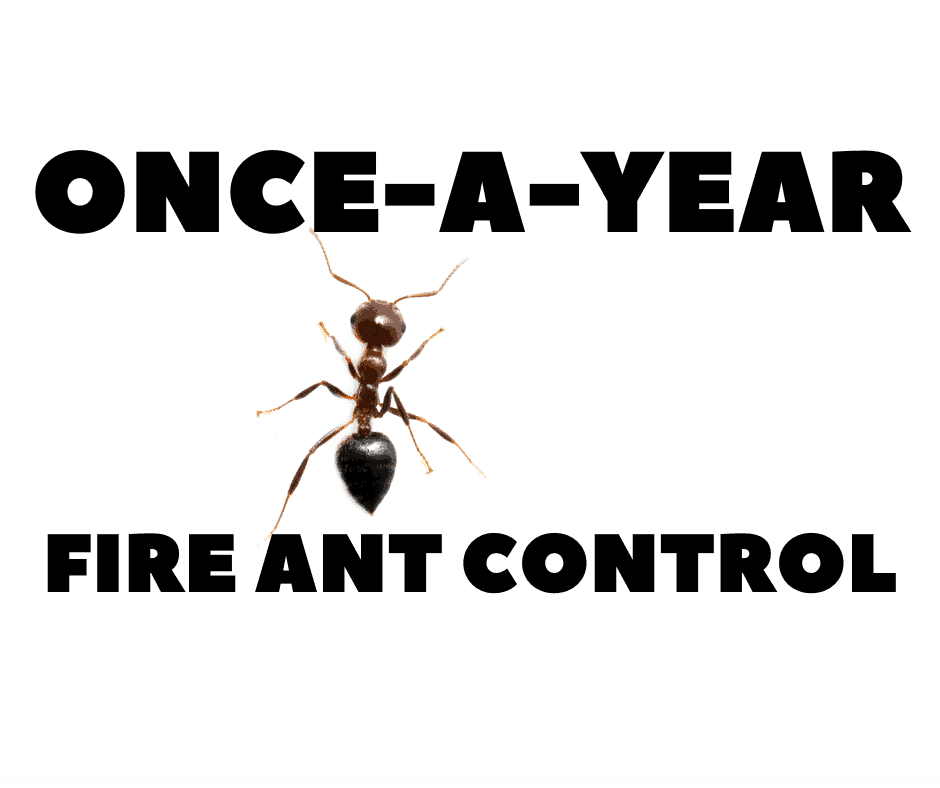
- 1.3 Our Once‑A‑Year Fire Ant Control Service
- 1.4 DIY Fire Ant Control: Quick Fixes You Can Try
- 1.5 Proudly Serving Brevard & Indian River Counties
- 1.6 Ready for Peace of Mind?
- 1.7 Fire Ant Control – Frequently Asked Questions
- 1.8 RELATED LINKS:
Guaranteed One‑Year Fire Ant Elimination – Just $0.07/sq ft
Fire ants are more than a nuisance — they bite, sting, and spread fast, taking over your lawn before you know it.
Whether you’re battling towering imported fire ant mounds or the sneakier native variety that builds low to the ground, Pest & Lawn Organic Guard Inc. has your back. Our once‑a‑year treatment is guaranteed to eliminate fire ants — and keep them out for a full year.
TL; DR Fire Ant Control
Cost: Just $0.07 per sq. ft.
Coverage: One treatment, two visits, twelve months of protection.
Process: Premium bait + follow‑up imidacloprid application.
Timing: Applied dry, early morning or evening for maximum effectiveness.
Guarantee: If fire ants return within a year, we come back free.
Local Expertise: Serving Brevard & Indian River counties with owner‑operated care.
Schedule Your Fire Ant Treatment Today
Booking your fire ant treatment is fast and easy — and timing matters. Because fire ant bait is a food product, it must be applied when conditions are dry. If it’s wet from rain, dew, or irrigation, the ants will ignore it and the treatment won’t work.
That’s why we schedule treatments at the beginning or end of the day, when conditions are best and ants are most active. This ensures maximum effectiveness and long‑lasting results.
👉 Click below to schedule your guaranteed one‑year fire ant treatment online, or call/text 321‑704‑0434 for immediate service.
Get an Instant Online Fire Ant Control Estimate!
Wondering what your fire ant treatment will cost? Use our interactive slider tool to get a quick, transparent estimate.
At just $0.07 per square foot, our once‑a‑year treatment is guaranteed to eliminate fire ants and keep them out for a full year.
No hidden fees. No contracts. Just fast, reliable fire ant control tailored to your property size.
👉 Move the slider to match the square footage of your lawn and instantly see your price.
Imported vs. Native Fire Ants in Florida
Florida lawns host two main types of fire ants, and knowing the difference is key to effective treatment.
Imported Fire Ants
- Appearance: Build tall, obvious mounds that are easy to spot.
- Behavior: Aggressive stingers most homeowners recognize.
- Risk: Colonies expand quickly, making them the most disruptive variety.
Native Fire Ants
- Appearance: Flatter, low‑profile nests that blend into the ground.
- Behavior: Sneakier, often going unnoticed until infestations spread.
- Risk: Harder to detect, which makes prevention and early treatment critical.
Common Misidentifications
- Ghost Ants: Some fire ant colonies look smaller or lighter than expected, especially new colonies or multiple‑queen colonies. This often leads homeowners to mistake them for ghost ants.
- Wrong Bait: Using sugar‑based baits like Terro barely slows fire ants down — they require protein‑based baits such as Advion or Amdro.
- Bigheaded Ants: Frequently confused with fire ants due to their similar appearance and behavior. The giveaway is their oversized heads. Fortunately, our treatment approach works for them too.
By clearly identifying the species and avoiding common mistakes, we ensure fast, accurate fire ant control across Brevard and Indian River counties.
Why Fire Ants Love Your Yard
Ants are territorial by nature, which means there will always be colonies filling the vacuum on your property. The only question is: which ants will you be battling?
- Native Fire Ants & Bigheaded Ants: These species form sprawling, low‑profile nests that can stretch across multiple properties.
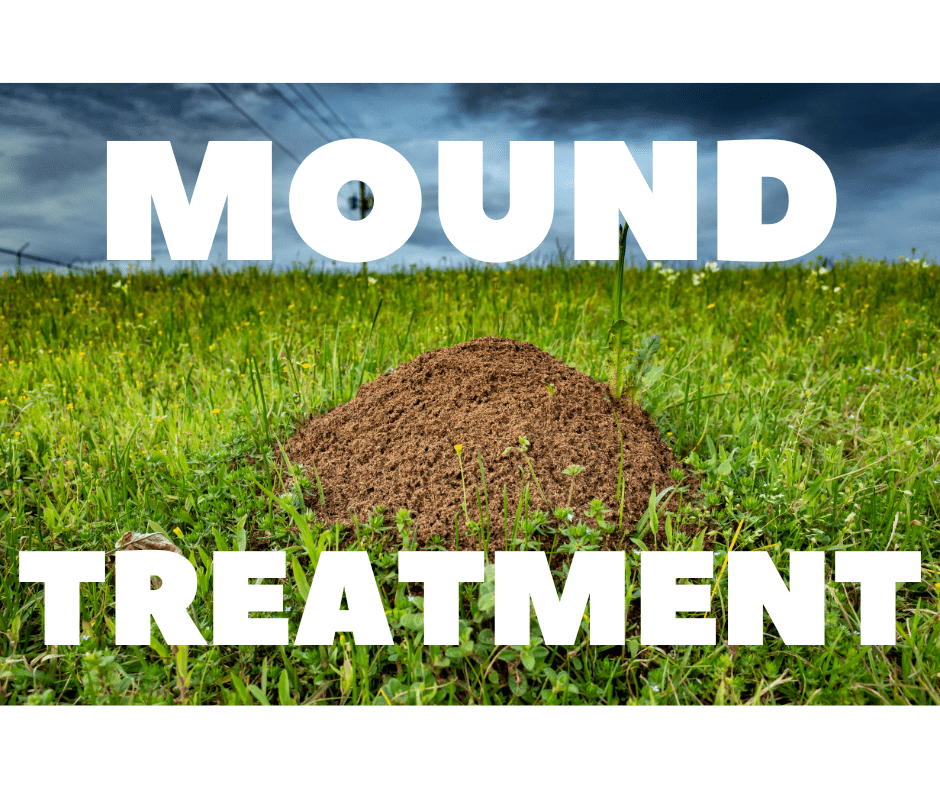
- Imported Fire Ants: Known for their tall mounds, each one is a separate colony — and even a small lot can host several.
What Fire Ants Eat
Fire ants are opportunistic omnivores, settling anywhere they can find food sources such as:
- Insects and other invertebrates (they’re little hunters!)
- Dead insects and carrion
- Honeydew from aphids and scale insects
- Sugary plant sap
- Seeds and fruits
- Pet food or dropped people food
“Pestivious” Conditions That Attract Them
Your lawn might be unintentionally rolling out the red carpet for fire ants. Common culprits include:
- Chinch bugs in St. Augustine grass — basically a fire ant buffet
- Overwatering — moist soil near ditches, lakes, canals, or heavily irrigated lawns is prime real estate for colonies
- Aphid or scale infestations — these pests produce honeydew, which fire ants absolutely love
By understanding why fire ants thrive in your yard, you can see why professional treatment and prevention are essential. It’s not about eliminating ants entirely — it’s about controlling which species dominate your property.
Our Once‑A‑Year Fire Ant Control Service
One Treatment. Two Visits. Twelve Months of One Treatment. Two Visits. Twelve Months of Peace.
Visit One: The Bait
We start with a premium fire ant bait designed to wipe out colonies from the inside:
- Hydramethylnon – A slow‑acting stomach poison that kills ants after they share it within the colony.
- Methoprene (IGR) – An insect growth regulator that halts colony development and prevents new generations.
This bait is irresistible to worker ants, who carry it back to the nest — targeting the colony at its core.
Helpful Content: DIY Baiting Tips
Chinch Bug Factor: If chinch bugs are present in your lawn, ants may prefer feeding on them instead of bait. For best results, reduce chinch bug populations first.
Amdro: Sold in 5‑lb bags, applied at about 10,000 sq. ft. per bag. If you buy it, use it all — it goes bad quickly once opened.
Advion: My preferred professional bait. A 5‑lb container covers over 2 acres, so always read the label carefully before applying.
Timing Matters: Bait must be applied when grass is dry — not after rain, irrigation, or heavy dew — or ants will ignore it.
Visit Two: The Knockout
About 7 days later, we return to treat your entire lawn, landscape beds, and even contributing trees and plants with a non‑repellent insecticide (Imidacloprid). This quietly eliminates any survivors and provides long‑lasting protection for nearly a year.
Integrated Pest Management (IPM)
Our approach combines baiting, targeted insecticide, and habitat reduction:
Deliver lasting results with minimal impact on your lawn and environment.
Reduce food sources (like chinch bugs, aphids, and excess moisture).
Apply products strategically where ants forage and nest.

Your Cost: Only $0.07 per sq. ft.
No sales pitches. No gimmicks. Just effective, science‑backed fire ant control with a 100% one‑year guarantee.
Owner‑Operated Service: You deal directly with the same expert who answers your call and treats your property.
Transparent Pricing: At only $0.07 per square foot, you know exactly what you’re paying — no hidden fees.
Guaranteed Results: If fire ants return anytime in the next 12 months, we’ll come back and fix it for free.
DIY Fire Ant Control: Quick Fixes You Can Try
We get it — sometimes you just want a quick DIY solution. If you’ve only got 1–2 fire ant mounds, here are your options:
Option 1: Drench the Mound
- Grab a household pesticide labeled for indoor & outdoor use (like Ortho Home Defense).
- Check the label to ensure it covers fire ants.
- Drench the mound thoroughly, especially the center.
- Result: Fast knockdown of the colony, but doesn’t prevent new ones from popping up.
Option 2: Use Fire Ant Bait
There are two main types of bait products you’ll find at the store:
Fire Ant Bait (Slow‑Acting)
- Contains poisons like hydramethylnon.
- Worker ants carry it back to the colony, eliminating the queen.
- Apply in early morning or late evening when ants are most active.
- Must be dry — dew or rain ruins it.
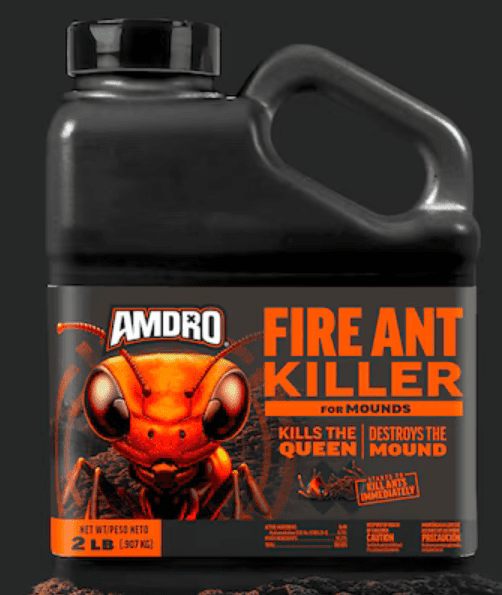
- Example: Amdro Fire Ant Bait (5 lbs covers ~10,000 sq. ft.). Use it all once opened — it goes bad quickly.
Contact Granules (Fast‑Acting)
- Contains insecticides that kill ants on contact.
- Must be watered in to activate.
- Works well for imported fire ant mounds, but won’t reach sprawling colonies.
- Good for quick knockdown, but not long‑term relief.
Pro Tips from Pest & Lawn Organic Guard
Think Long‑Term: DIY can help with small problems, but for sprawling colonies or year‑round protection, professional treatment is the only way to guarantee results.
Advion vs. Amdro: I recommend Amdro for DIY, but I personally use Advion because it’s more effective and covers over 2 acres per 5‑lb container. Proper timing is key — both can work well if applied correctly.
Chinch Bug Factor: If chinch bugs are present in your grass, ants may prefer feeding on them instead of bait. For best results, reduce chinch bug populations first.
Call. Text 321-704-0434 or E Mail to start your fire ant freedom today!
Proudly Serving Brevard & Indian River Counties
We provide guaranteed fire ant control for homeowners across Florida’s Space Coast and Treasure Coast, including:
- Melbourne Beach, Indialantic, Satellite Beach, Cocoa Beach
- Vero Beach, Sebastian, Barefoot Bay
- All of Brevard & Indian River Counties
Whether it’s your primary residence or a seasonal winter getaway, Pest & Lawn Organic Guard Inc. protects your slice of Florida paradise from fire ants — with treatments that last up to a year.
Ready for Peace of Mind?
No more mounds. No more stings. No more worries.
Call or text Pest & Lawn Organic Guard Inc. @ 321-704-0434 today for a quote or schedule your once-a-year fire ant control service!
Fire Ant Control – Frequently Asked Questions
General Fire Ant Questions
Fire Ant Treatment – DIY & Professional
✅ About Our Fire Ant Control Service
Fire Ant Behavior & Biology
Other Ant Species You Might Confuse with Fire Ants
Pricing & Service
RELATED LINKS:
https://sfyl.ifas.ufl.edu/lawn-and-garden/fire-ants-in-florida/