
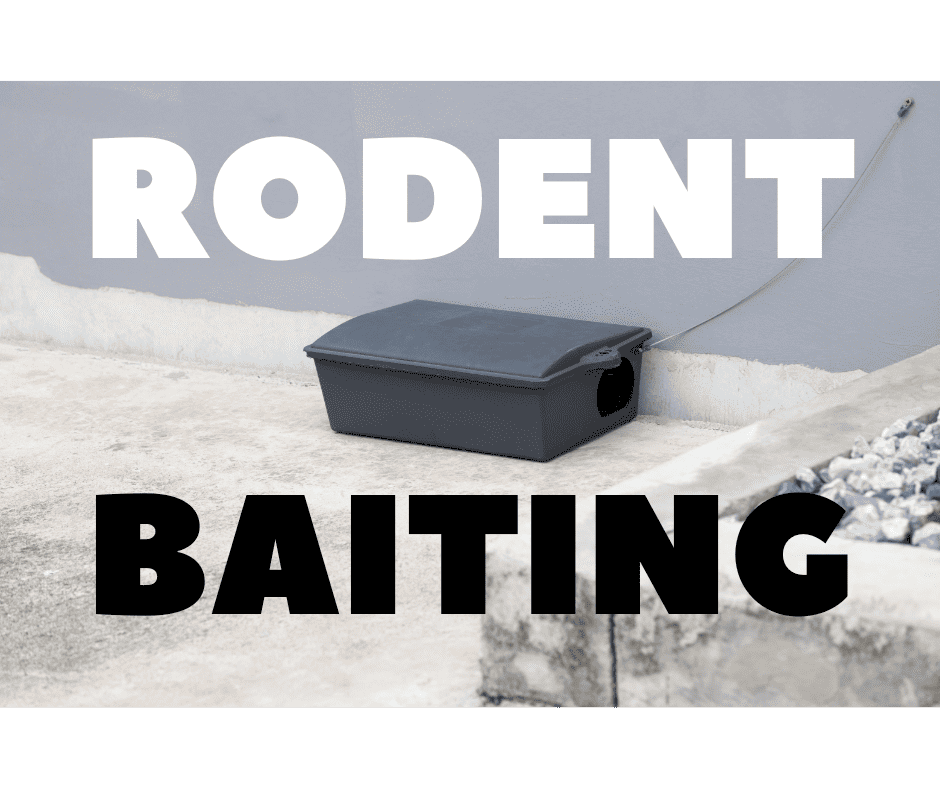
Rodent Baiting in Brevard and Indian River Counties
Rodent Baiting Service for Brevard and Indian River Counties
If you live anywhere from Cocoa Beach down to Vero Beach, or inland around Palm Bay or Sebastian, you already know rats are not a seasonal problem here. They are a year-round fact of life.
The reason goes back to the barrier island itself. Back in the 80s, diamondback rattlesnakes were everywhere on the dunes and in the mangroves. They kept the rat population in check naturally. As the area developed and neighborhoods expanded, the snakes disappeared. Fewer snakes, more rats. It really is that simple, and it is something we have watched happen over decades of working on this island.
Between the mangroves along the Indian and Banana Rivers, the sea grape dunes on the east side, coastal vegetation, and the older concrete block homes in places like Eau Gallie and Downtown Melbourne, this area has some of the highest rodent pressure in the state. Pest & Lawn Organic Guard has been working in these communities long enough to know exactly where rats hide, where they travel, and what it takes to get them under control.
Ready to get started? Book your service online or call us at 321-704-0434
Schedule Your Rodent Control Service Now
One Important Thing Before We Start: Never Bait If Rats Are Already Inside
This is the most common mistake we see, and it causes a lot of unnecessary misery.
If rats are getting inside your home, baiting outside first is the wrong move. A rat that eats bait and then goes back into your walls or attic to die will create a smell that no candle, spray, or air freshener can touch. In August, it gets unforgettable fast.
If you have rats inside, here is the right order of operations:
First, we trap and remove the rats that are already inside. At the same time, we identify and seal the entry points so no new ones can get in. That process is called rodent exclusion, and we offer it as a separate service that pairs directly with baiting.
Once the interior is clear and sealed, then we set up outdoor bait stations to knock down the surrounding population and keep new rats from moving in.
If you are not sure whether you have rats inside or just around the outside of your home, give us a call. We can help you figure that out before anything else.
How Our Rodent Baiting Service Works
Rodent baiting is not complicated, but doing it right makes a significant difference in whether it actually works.
We Come to You and Assess the Property
Every property is different. A beachside home in Melbourne Beach with sea grape along the side yard has different pressure points than a canal home in Vero Beach or a block home in Rockledge. We walk the property, identify where rats are traveling and harboring, and decide how many stations you need and exactly where to place them.
Most homes need between three and five stations placed around the perimeter. Beachside homes, riverfront properties, and homes near vacant lots or mangroves often need more.
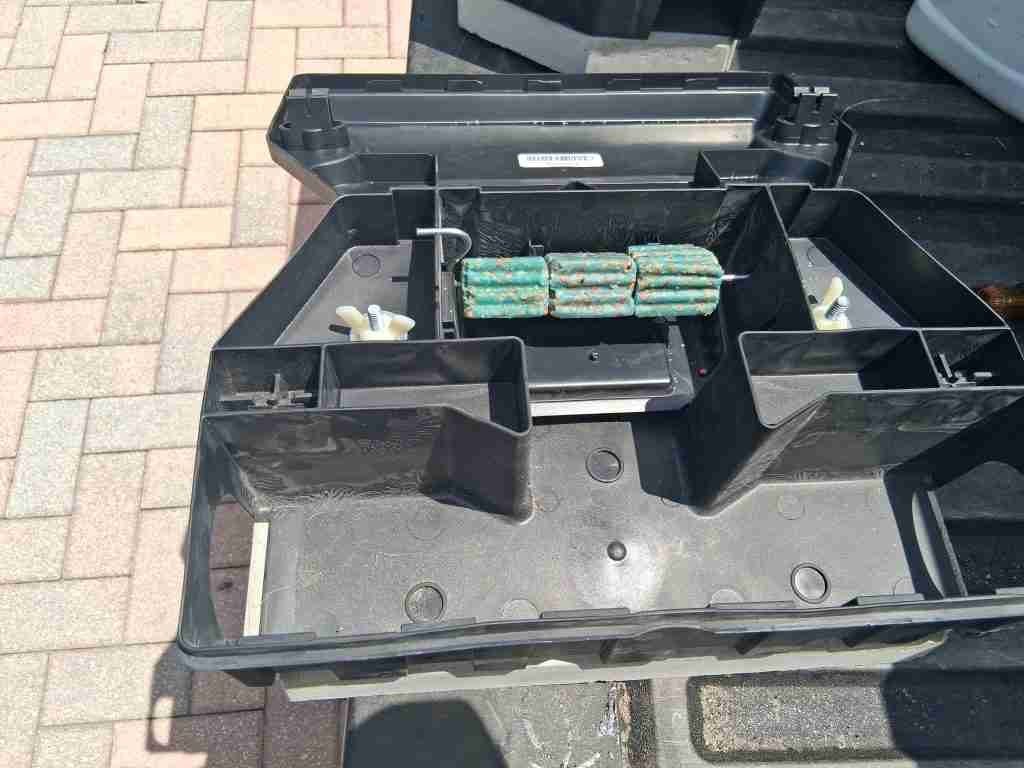
We Install Commercial-Grade Bait Stations
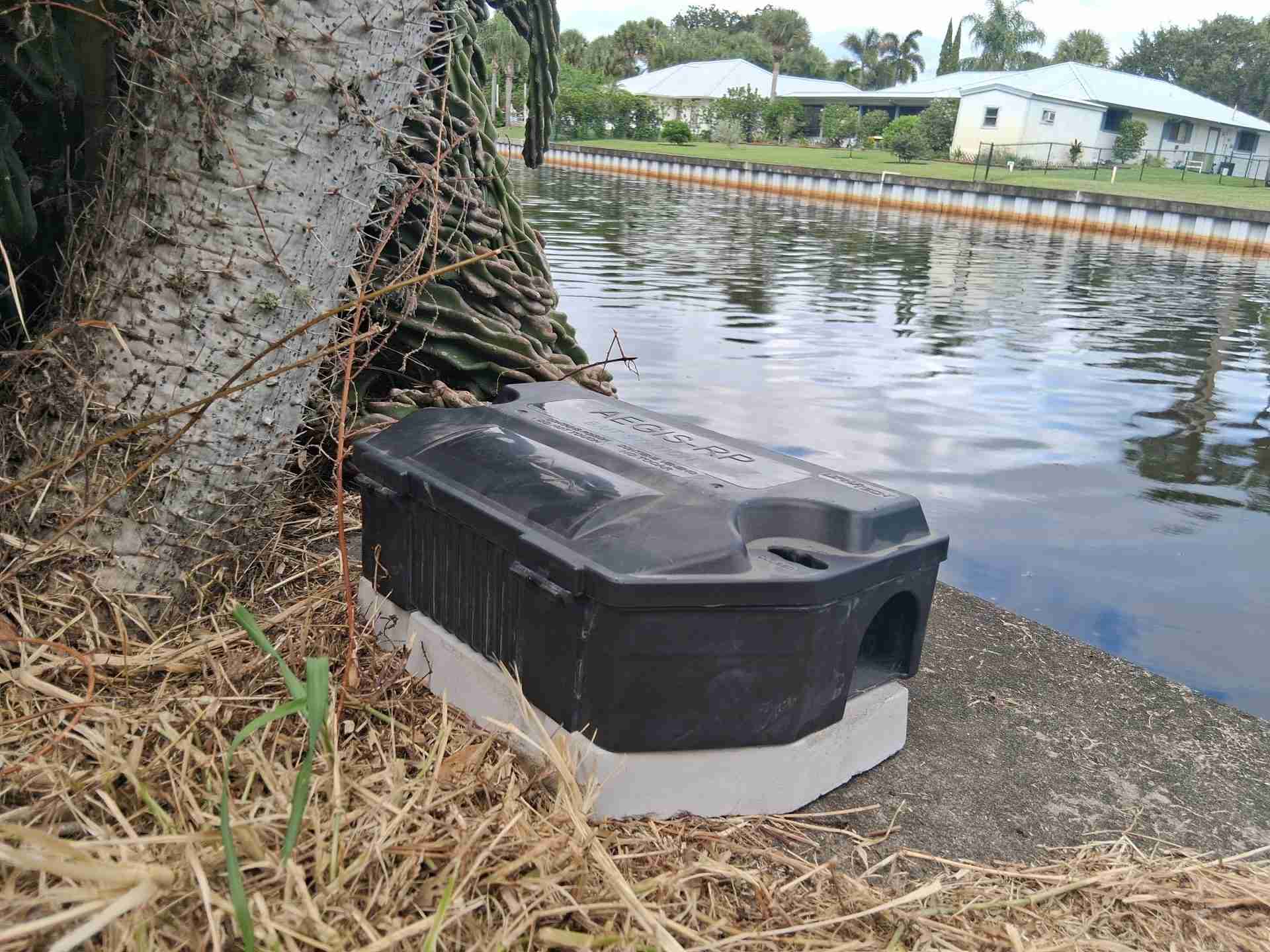
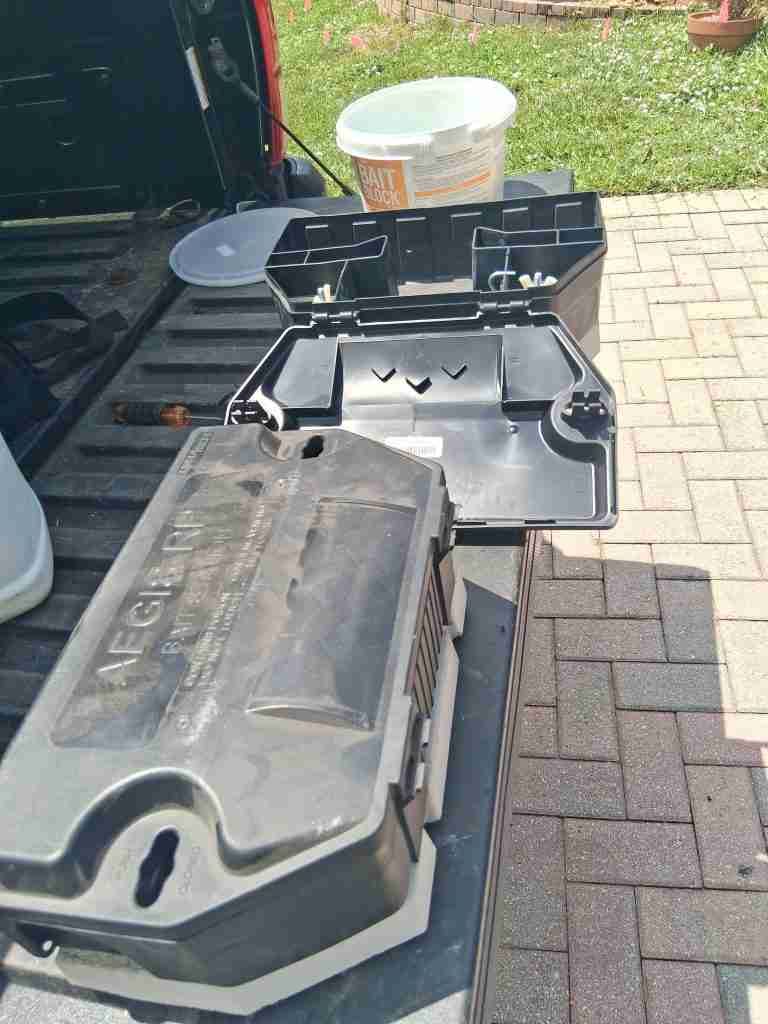
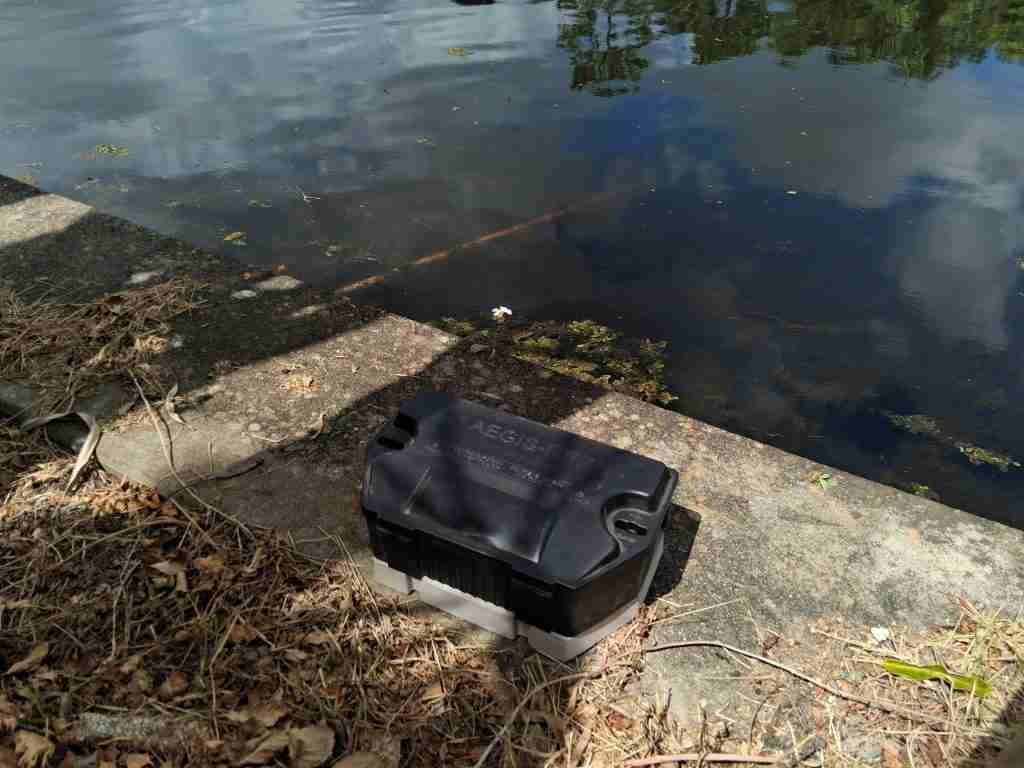
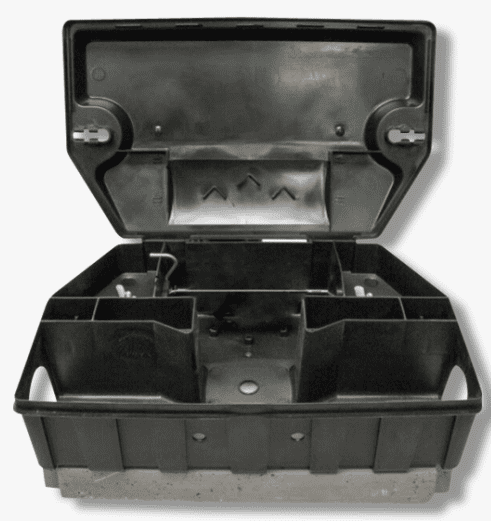
We use heavy-duty, tamper-resistant bait stations built to handle Florida weather, coastal conditions, and the raccoons that will absolutely try to walk off with anything that is not secured.
We offer three station types depending on your situation:
| Station Type | Price | Best For |
|---|---|---|
| Standard Bait Box | $40 | Light pressure, sheltered locations |
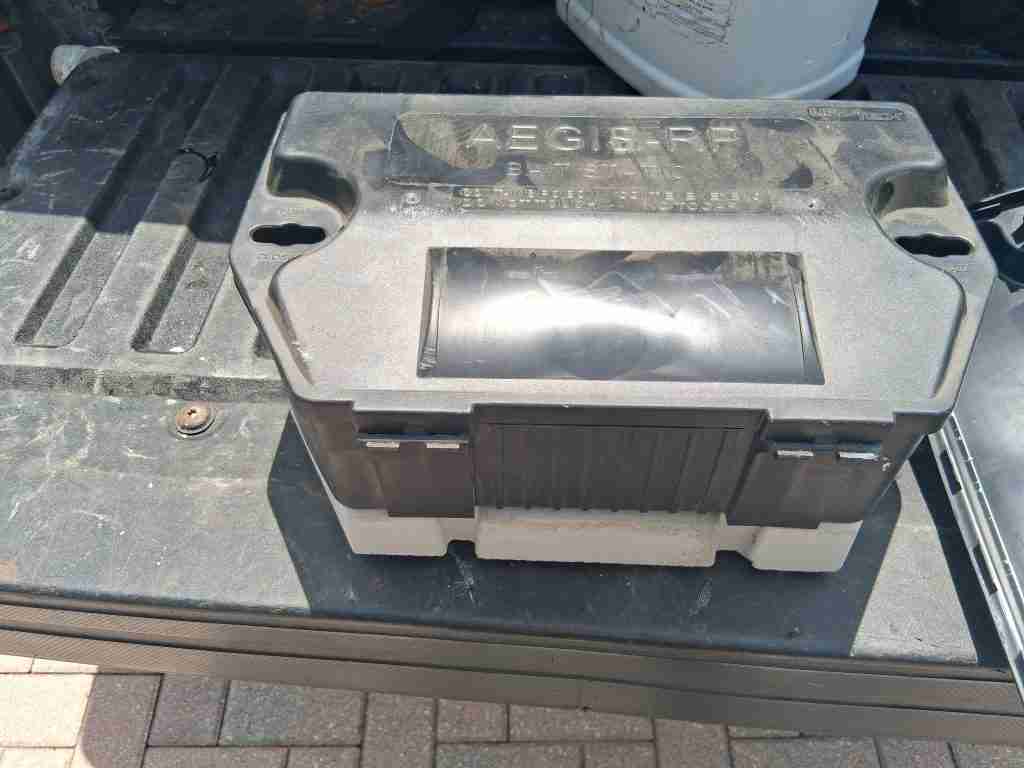
| Weighted Bait Box | $55 | Most homes, outdoor use, coastal areas |
| Metal Weighted Box | $99 | High-pressure areas, permanent installation |
The weighted boxes stay put even near seawalls, on docks, and in areas that get wind and water. We place them along fences, foundations, and anywhere rats are running, which is almost always tight against a wall or structure.
We Come Back and Refill Them
Rats will not eat stale bait. Old bait means wasted money and no results. We swap out bait on a quarterly schedule for most homes, and more frequently for properties with higher activity.
Refill service is $35 per box per visit.
We also rotate bait types seasonally to prevent bait aversion, which is a real thing with smart, adaptive animals like rats.
You can handle your own refills if you prefer. We will show you what to buy and how to do it correctly.
Why Rats Are So Bad on the Barrier Island
This is not something most pest control companies talk about because most of them are not from here.
The barrier island sits between the Atlantic Ocean to the east and the Indian River Lagoon to the west. The dunes on the east side are full of sea grape, railroad vine, and other vegetation that rats nest in freely. The mangroves on the west side are one of the best rat habitats on earth. Dense, wet, full of cover, and nearly impossible to treat.
The result is a rat population that lives on both sides of the island and moves through residential neighborhoods looking for food and shelter. Add in the older CBS homes with gaps around pipes and AC lines, the abundance of citrus trees, outdoor pet food, and chicken coops, and you have everything a rat needs to thrive year-round.
We are based right here. We have been working in Brevard and Indian River County long enough to know this problem from the inside out.
How to Get the Most Out of Bait Stations
Whether we are maintaining your stations or you are handling your own refills, a few things make a big difference in how well baiting works.
Remove competing food sources. Rats will eat pet food, chicken feed, fallen fruit, and unsecured trash before they ever touch a bait station. If you are leaving food out overnight, the bait is not going to compete. Pick up pet food at night, secure trash cans, and pick up fallen citrus.
Keep the stations positioned correctly. Rats run along walls and fences. They almost never cross open ground. A station sitting in the middle of the yard will get ignored. Stations placed tight against a fence line, foundation wall, or dense vegetation will get hit consistently.
Keep bait fresh. If a station is getting rained into, if the bait is more than a few months old, or if the bait type has not been rotated in a while, the results will suffer. This is one of the main reasons our service plan works better than buying a station from the hardware store and forgetting about it.
Service Area
We provide rodent baiting service throughout Brevard and Indian River County, including:
Palm Bay, West Melbourne, Melbourne, Suntree, Viera, Rockledge, Merritt Island, Cape Canaveral, Cocoa Beach, Indian Harbour Beach, Satellite Beach, Indialantic, Melbourne Beach, Vero Beach, Indian River Shores, Sebastian, and Barefoot Bay.
We do a lot of work on the barrier island and in coastal communities, but we also see significant activity in wooded and older inland neighborhoods.
Ready to Get Rats Under Control?
We will walk your property, tell you exactly how many stations you need, and get everything set up in a single visit. No long-term contracts, no pressure, just a real assessment from people who know this area.
Call 321-704-0434
How Much Does Rodent Baiting Cost?
The cost of Rodent Boxes depends on the quality of box you’d like to have installed.
Rodent Control Box Pricing:
Rodent Box Type: | Price: | Description: |
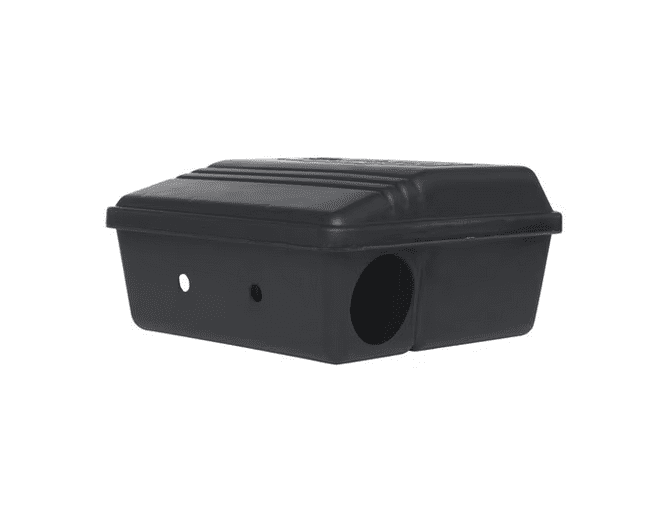 Basic Unweighted Box | $40.00 | Unweighted Rodent Control Bait Box This basic bait box is perfect for light rodent issues and indoor use. It’s a no-frills solution to keep bait contained and away from non-target animals. |
Weighted Rodent Box | $55.00 | Weighted Rodent Control Bait Box Don’t let raccoons or bigger pests walk off with your bait! This weighted box is built to stay put, ensuring your bait stays where it’s supposed to. |
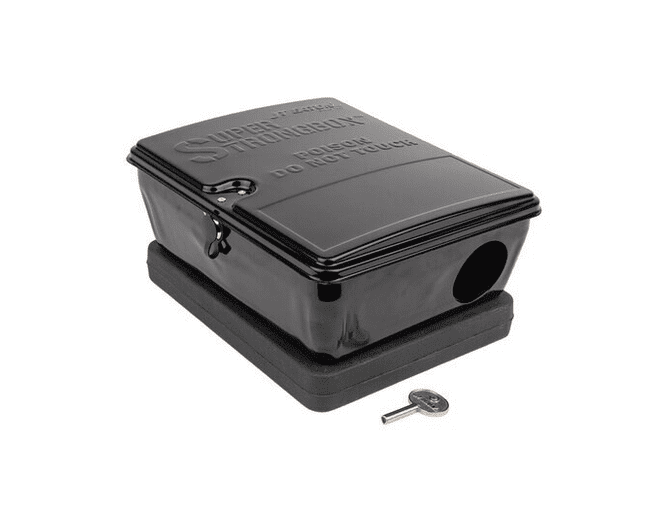 Premium Rodent Box—Also Available in White! | $99.00 | Metal Weighted Rodent Control Bait Box This is the Fort Knox of bait boxes. This heavy-duty, metal-weighted box is nearly impossible for critters to move. |
Rodent Baiting FAQs for Brevard & Indian River County
Service Area & Local Rodent Problems
🚫 Before You Start Baiting
🧀 DIY Rodent Baiting Tips
🐕 Pet Safety & Rodent Bait
Rodent Bait Station Options & Costs
🌧️ Placement & Weather Tips
🧠 Final Tips & Considerations
Related Links; Rodent Baiting and Control
https://www.epa.gov/rodenticides/safely-use-rodent-bait-products
https://edis.ifas.ufl.edu/publication/DH044