Lethal Bronzing Disease: An Expert Guide to Protecting Palms in Brevard & Indian River Counties
Contents
- 1 What Is Lethal Bronzing Disease and How Can You Treat It?
- 1.1 A Local Perspective for the Space & Treasure Coasts
- 1.2 Recognizing the Symptoms of Lethal Bronzing
- 1.3 How Lethal Bronzing Spreads and a Proactive Solution
- 1.4 My Commitment to Your Palms’ Health
- 1.5 DIY Treatments to Protect Your Palms
- 1.6 Treating Your Palms: A Word on Imidacloprid and Pollinators
- 1.7 When a Palm Cannot Be Saved
- 1.8 Lethal Bronzing Treatments
- 1.9 Palm Host Range of the LBD Phytoplasma
- 1.10 Final Thoughts: Proactive Protection is Your Best Defense
- 1.11 👉 Book your palm treatment online here
- 1.12 Frequently Asked Questions About Lethal Bronzing Disease
What Is Lethal Bronzing Disease and How Can You Treat It?
A Local Perspective for the Space & Treasure Coasts
Just when you thought you were done dealing with laurel wilt wiping out our bay trees and spiraling whiteflies taking over the coconut palms, here comes another botanical nightmare.
If you’ve noticed palm trees in our area dying off, the likely culprit is the latest unwelcome guest: Lethal Bronzing Disease (LBD).
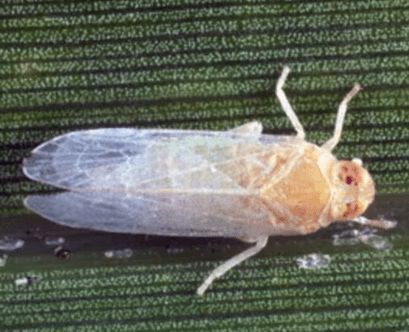
As a palm tree specialist with 20 years of experience, I’ve seen this new terror spread through our communities firsthand. It’s a highly aggressive, fast-spreading phytoplasma—a bacteria-like organism—that’s transmitted from palm to palm by a tiny insect known as the American palm cixiid planthopper. Yes, a planthopper, of all things!
This devastating disease was first identified in Florida about two decades ago, and it has now been confirmed in at least 36 counties. It affects over 21 different palm species, including many of the ones we love most here in Brevard and Indian River County, like the Sabal (cabbage) palm, Date palm, and Christmas palm.
The brutal truth is this: once a palm shows symptoms of LBD, it’s already too late. The infection is irreversible, and the tree is a goner. The only effective strategy is proactive prevention to protect your healthy palms and, mercifully, stop the spread.
Recognizing the Symptoms of Lethal Bronzing
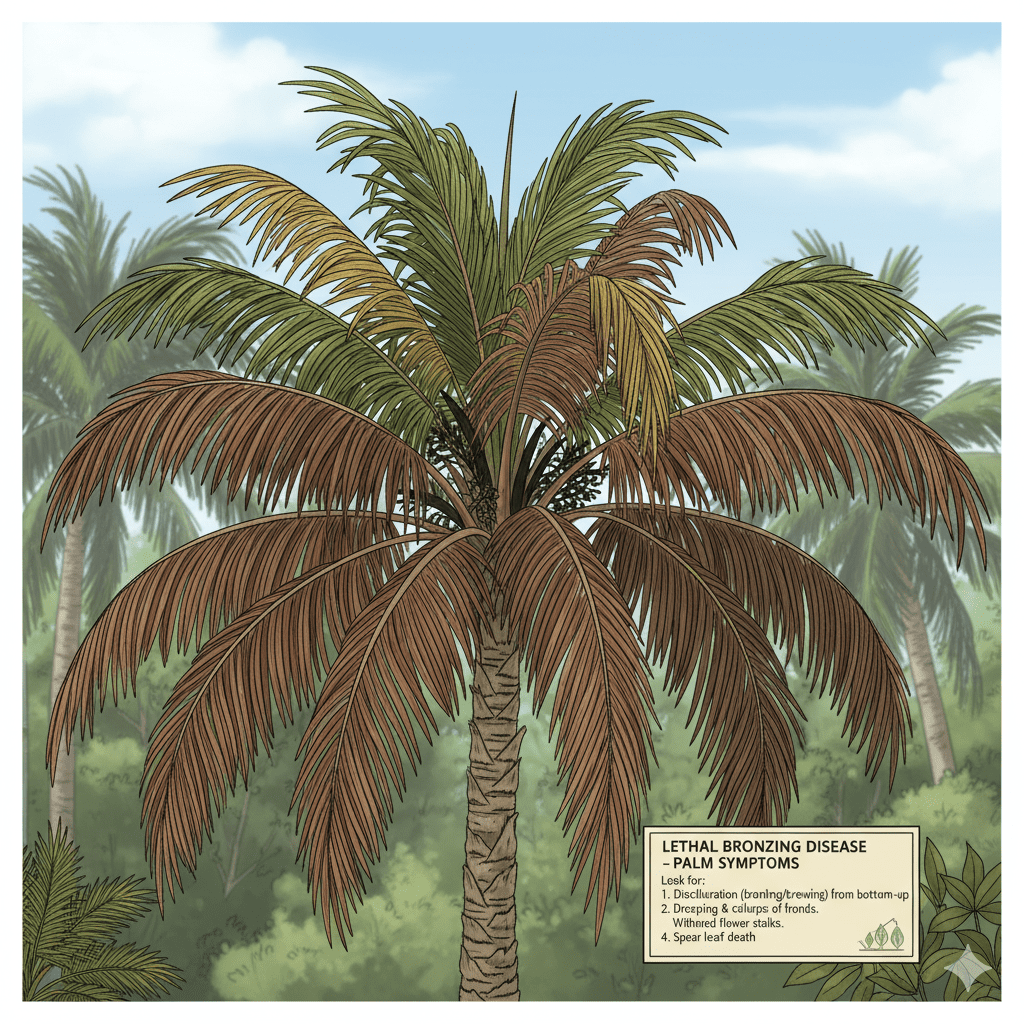
One of the most deceptive and tragic aspects of Lethal Bronzing is how it slowly and subtly takes over a palm. The disease doesn’t kill overnight; it progresses over several months, with symptoms that can easily be mistaken for other issues.
Here are the tell-tale signs I look for when diagnosing an infected palm in Brevard or Indian River County:
- Premature Fruit and Flower Drop: The first sign is often a sudden and complete drop of all green fruit or flowers.
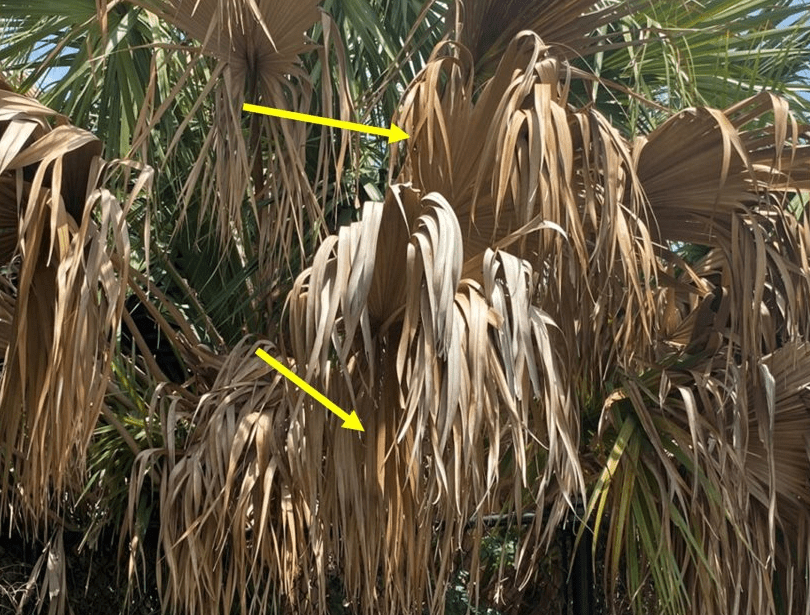
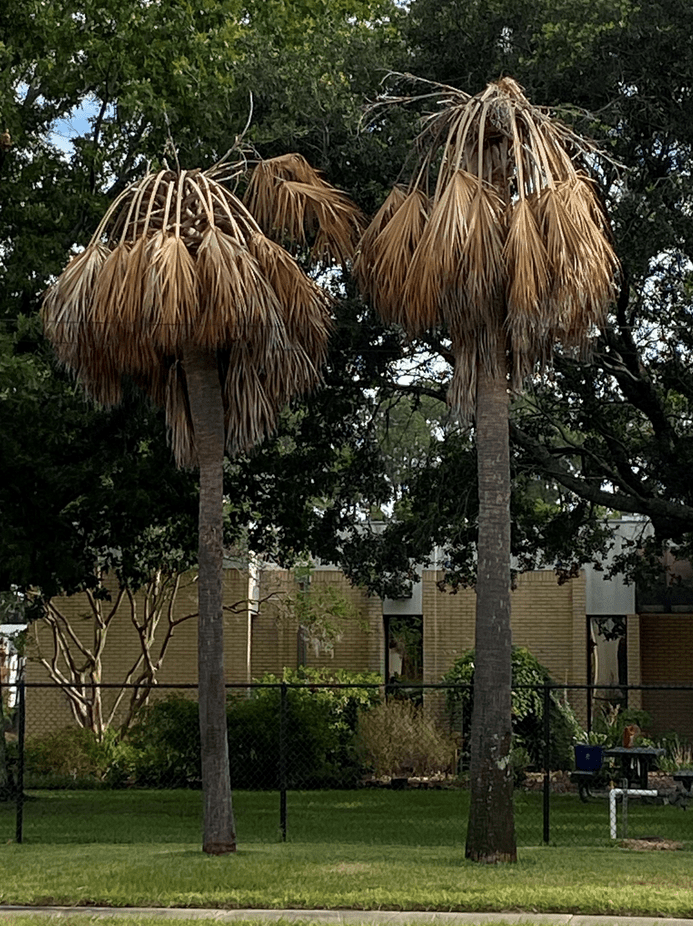
- Spear Leaf Death: The spear leaf or growing tip, which is the newest, unopened frond in the center of the crown, dies first. This is a critical indicator because once the growing tip is gone, the palm cannot be saved.
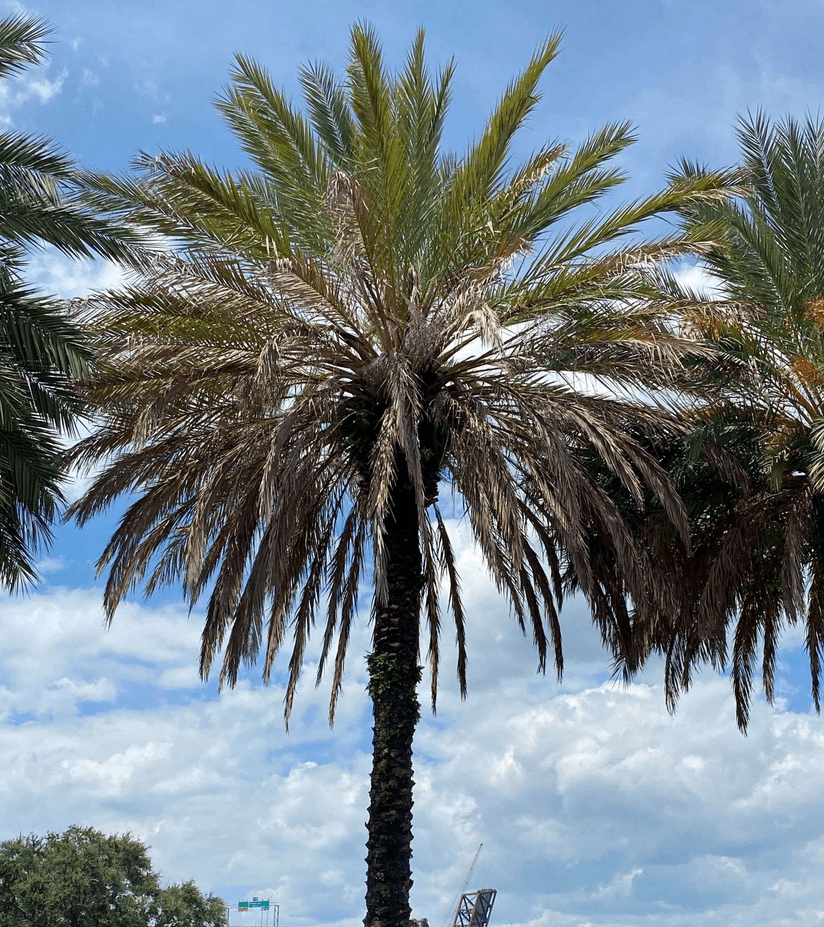
- Progressive Frond Discoloration: The lower fronds begin to turn a characteristic reddish-bronze or grayish-brown color, and this discoloration slowly moves up the canopy.
While these symptoms are a clear red flag, they unfortunately indicate that the infection has already progressed to an irreversible stage. By the time these signs are visible, the palm’s growing tip is already dead, and it cannot be revived. This is precisely why a preventative approach is the only effective defense.
How Lethal Bronzing Spreads and a Proactive Solution
Unlike a disease like our notorious Ganoderma Butt Rot, which spreads through soil and spores, Lethal Bronzing is exclusively an insect-vectored disease. The palm cixiid planthopper is the sole carrier. This means preventing the disease is all about controlling the bug, not about tool sanitation.
The insect’s feeding habits are key. When a planthopper feeds on an infected palm’s sap, it picks up the phytoplasma. It then flies to a healthy palm and, as it feeds, injects the disease, spreading the infection.
By placing your palms on a regular protection plan, you’re transferring the burden of this continuous threat from yourself to me. Here’s what that means for you:
My Commitment to Your Palms’ Health
I’m an expert in this, so you won’t have to worry about monitoring for tiny bugs or remembering the next treatment. I keep your palms on a consistent schedule, providing the necessary preventative treatments at the correct intervals to ensure year-round protection.
I can also treat your palms for other insects like ants and scale that can infest them.
Since I’m the one consistently on-site, I can monitor your palms for any subtle changes and immediately address issues, well before a homeowner might notice. My experience allows me to spot the initial signs of stress or infection, which is crucial for preventing disease spread.
I also ensure your palms get the specific micro-nutrients and high-end quality fertilizer they need to look their best. A healthy, well-fed palm is better able to fight off diseases like Lethal Bronzing and whatever new pest may arrive next year.
My service gives you peace of mind. You can trust that your palms are being proactively protected by an expert who is deeply familiar with these diseases and how they behave in our local area. You get to enjoy your landscape without the constant anxiety of a potential disease outbreak.
DIY Treatments to Protect Your Palms
Here’s the good news: while there is no cure for an infected palm, you can effectively protect healthy ones with preventative treatments.
The best and most reliable approach is a soil drench with a systemic insecticide. This treatment is absorbed by the palm’s root system, making the tree’s sap toxic to the planthoppers that feed on it. The insecticide spreads throughout the tree, offering comprehensive, long-lasting protection.
Recommended Products and Rates:
- Dominion 2L – Mix at a rate of 0.1 to 0.4 fluid ounces per inch of the palm’s trunk diameter.
- Bandit 2F – Use at the same rate as Dominion 2L, which is 0.1 to 0.4 fluid ounces per inch of trunk diameter.
- BioAdvanced 3-in-1 Insect, Disease & Mite Control – This product works well for smaller palms, such as Christmas palms.
Treating Your Palms: A Word on Imidacloprid and Pollinators
The recommended treatment for LBD involves systemic antibiotics and insecticides, like Imidacloprid. This is a powerful tool for fighting the planthopper, but it comes with a major caveat: it is not good for our bees and other beneficial pollinators.
If you choose to use this treatment, a crucial step is to prevent your palm from flowering. Bees love palm flowers, and the insecticide will contaminate the pollen and nectar. By removing the flower stalks before they bloom, you protect these vital insects.
Cutting off the flowers and fruit is also a good practice for the health of your palm. Producing fruit takes a significant amount of energy, and by removing it, you allow the palm to focus its resources on growth and staying healthy.
And, from a bug professional’s standpoint, those fallen palm fruits are a buffet for roaches and rats, attracting them right to your yard. Cutting the fruit stalks eliminates this food source, making your property less inviting to pests.
A Pro Tip from 20 Years in the Field
I’ve treated countless palms throughout Brevard and Indian River counties, and I’ve developed a technique to ensure the best possible results.
My secret? Always add a water-soluble fertilizer like potassium to your soil drench. Palms are “potassium pigs” and have a very strong appetite for it. When you mix a potassium fertilizer with the systemic insecticide, the palm rapidly absorbs both, ensuring the treatment is pulled up and distributed throughout the entire tree, giving you much better protection.
A quick but crucial note on application: Be very careful to avoid splashing the mixture onto any concrete or rocks. From my experience, certain fertilizer and insecticide mixtures can leave a permanent stain. That’s why we take extra care to only apply the solution directly to the soil and root area, ensuring your landscape stays clean.
When a Palm Cannot Be Saved
This is a hard reality to face, but it’s crucial for understanding the disease: Once a palm is infected with the phytoplasma and begins to show symptoms like spear leaf death or severe bronzing, it is too late. The infection is irreversible, and the tree cannot be saved.
From my perspective, the most responsible action you can take is to remove and dispose of the infected palm as quickly as possible. This is the only way to eliminate the host and protect nearby healthy palms from being infected by the planthopper vector.
Lethal Bronzing Treatments
If the idea of measuring, mixing, and applying chemicals yourself seems daunting, I’m here to help. My mission is to give homeowners like you peace of mind by handling your palm’s protection with expert precision and care.
My pricing is simple and transparent:My Service Rate: $8 per inch of trunk diameter
Here’s how to calculate your cost:
- Measure the palm’s trunk diameter at chest height.
- Multiply that number by 8.
For example, a palm with a 12-inch trunk diameter would be a $96 investment in its long-term health.
As a Veteran and owner-operator, I’ve completed the most advanced courses on palm diseases to ensure I’m providing the highest level of service. You can trust that your palms are in expert hands.
Ready to protect your trees? You can book a service anytime using my simple online booking tool. Just select a time that works for you, and I’ll be there to protect your landscape like magic.
Palm Host Range of the LBD Phytoplasma
Lethal Bronzing Disease (LBD) was first known as Texas Phoenix Palm Decline (TPPD) because it was initially found devastating Phoenix palms in Texas. Given its origin, it’s a safe bet the insect that spreads it, the American palm cixiid, won’t be bothered by a freeze, which is bad news since it’s been over a decade since the last one here.
The full list of confirmed host palms is extensive and includes many species popular in the Florida landscape.
| Scientific Name | Common Name |
| Adonidia merrillii | Christmas Palm |
| Bismarckia nobilis | Bismarck Palm (Silver) |
| Butia capitata | Pindo Palm (Jelly) |
| Carpentaria acuminata | Carpentaria Palm |
| Cocos nucifera | Coconut Palm |
| Livistona chinensis | Chinese Fan Palm |
| Phoenix canariensis | Canary Island Date Palm |
| Phoenix dactylifera | Edible Date Palm |
| Phoenix roebelinii | Pygmy Date Palm |
| Phoenix sylvestris | Wild Date Palm |
| Pritchardia pacifica | Fiji Fan Palm |
| Pseudophoenix sargentii | Buccaneer Palm |
| Sabal mexicana | Mexican Palmetto |
| Sabal palmetto | Cabbage Palm |
| Syagrus romanzoffiana | Queen Palm |
| Trachycarpus fortunei | Chinese Windmill Palm |
Final Thoughts: Proactive Protection is Your Best Defense
Lethal Bronzing is one of the most serious palm diseases Florida has ever seen, but the outcome doesn’t have to be a lost tree. With the right preventative care, your palms can be protected and your landscape preserved.
Whether you choose the DIY soil drench method or opt for the convenience of a professional service, the most important thing is to act before the infection takes hold. As I’ve learned from two decades of experience, the window for effective treatment is before symptoms appear, not after.
If you are located in Brevard or Indian River County, especially in the beachside and barrier island communities, I’m ready to help you implement a proactive plan to protect your palms for years to come.
👉 Book your palm treatment online here
And I’ll take care of the rest!
SEO Meta Description (for you to use):
Learn how to prevent Lethal Bronzing Disease in Florida palms with DIY soil drenches or professional treatments. Protect your palms before it’s too late with expert tips from Pest & Lawn Organic Guard.
Frequently Asked Questions About Lethal Bronzing Disease
General Lethal Bronzing Questions
Lethal Bronzing Disease Symptoms and Diagnosis
Prevention and Treatment
Professional Palm Protection
✅ Bottom Line: If your palm already has Lethal Bronzing, it cannot be saved—removal is the only option. But with preventative treatment, you can protect your healthy palms and avoid losing them to this devastating disease.