Lawn Overwatering: Unlock Sustainability & Make Your Lawn Thrive!
Contents
- 1 💧 Stop Drowning Your St. Augustine: The Overwatering Trap
- 1.1 After Scalping; One of the easiest ways to mess up your lawn is by overwatering it.
- 1.2 TL; DR: Stop Overwatering: Simply Automate Your Lawn’s Health
- 1.3 🍔 Irrigation Water is Like Fast Food for Your Turf
- 1.4 🤯 Impossible to Track: The Florida Weather Problem
- 1.5 🎯 The Best Solution: Upgrade to Smart Irrigation
- 1.6 What Is The Best Way To Water?
- 1.7 📅 The Truth About Florida Watering Frequency
- 1.8 🌧️ Why Your Irrigation System is “Supplemental”
- 1.9 Frequently Asked Questions; Rain Sensors & Why Overwatering Is Bad
- 1.9.1 How can I remember to change the frequency of irrigation?
- 1.9.2 Why do I need a rain sensor if we get a lot of rain in Brevard and Indian River County?
- 1.9.3 Isn’t a lush lawn dependent on constant watering?
- 1.9.4 What are the benefits of a deeper root system for my lawn?
- 1.9.5 How can a rain sensor help with weeds?
- 1.9.6 How does overwatering hurt the Indian River Lagoon?
- 1.9.7 What are some signs my lawn is being overwatered?
- 1.9.8 Besides rain sensors, what else can I do to have a healthy lawn?
- 1.9.9 How is overwatering my lawn detrimental to my lawn’s health similar to a person constantly over-consuming sugary drinks?
- 1.9.10 I already have an irrigation system. Can I add a rain sensor to it?
- 1.9.11 How much does a rain sensor cost?
- 1.9.12 Isn’t using a rain sensor bad for my lawn in the summer when it doesn’t rain much?
- 1.9.13 how can a rain sensor help to avoid root rot in the winter?
- 1.9.14 how can a mycorrhizal treatment help to use less water and reduce pollution to the Indian River Lagoon?
- 1.9.15 How do you fix overwatered grass?
- 1.9.16 Should I water my lawn every day?
- 1.9.17 What are the basic causes for fungal issues on my St. Augusting & Zoysia Lawn?
💧 Stop Drowning Your St. Augustine: The Overwatering Trap
After Scalping; One of the easiest ways to mess up your lawn is by overwatering it.
The easiest way to sabotage your beautiful turf, especially after scalping, is lawn overwatering.
Here on the Space and Treasure Coasts, we have the sunshine for lush, vibrant lawns, but simply setting a timer is not enough. Your sprinkler system is, by definition, a Supplemental Irrigation System—it should only supplement natural rainfall.
The harsh reality? If your system lacks a functional rain sensor (and most do), it’s nothing more than a constant source of trouble. It keeps your lawn saturated, directly causing year-round weeds like dollar-weed, sedge, and crabgrass, and leading to visible fungal outbreaks we see every fall and winter. Plus, our sandy soils mean excess water instantly flushes away (leaches out of the soil) your expensive fertilizer and pesticides, making your lawn fade much faster after an application than would otherwise be the case under ideal watering conditions.
TL; DR: Stop Overwatering: Simply Automate Your Lawn’s Health
Overwatering is killing your lawn and wallet. It causes constant dollar-weed, sedge, fungus, and nutrient loss in our sandy Florida soil. Because our weather is so erratic, manual watering always fails. The only real fix is to automate your watering with a new smart irrigation controller (most cost less than $200!) that waters only when truly needed, guaranteeing a healthier lawn and reducing pollution in the Indian River Lagoon. Having a working rain sensor can make your lawn look it’s best.
🍔 Irrigation Water is Like Fast Food for Your Turf
Think of irrigation water like fast food: While eating fast food is better than starving, regular consumption is clearly bad for your health.
Applying water to your lawn on a regular basis, regardless of need, and expecting peak health is like eating fast food for every meal and expecting visible abs and muscles—it simply isn’t happening.
Sure, you can apply costly products to fight the results of overwatering (dollar-weed, sedge, fungus), and the more you overwater, the more products are needed. But, like the human body, it is always better to prevent the unhealthy state.
By upgrading to a smart system or at least having a working rain sensor, your lawn only gets its “fast food” when it’s truly in “starvation (drought)” mode. This instantly avoids the issues caused by over-consumption: excessive weeds, fungus, a shallow root system, and nutrient leaching.
🔑 The Missing Piece: Cultural Controls
Since most homeowners hire out the mowing, you often cannot control results from things like scalping or using a dull blade that was just used on a diseased yard.
This means your lawn can easily fall into a poor state. While our fertilizer and chemical applications are vital, the water and maintenance controls are responsible for most of the turf’s problems & appearance.
The secret to a truly jaw-dropping St. Augustine lawn? It’s having all the essential cultural controls on point—specifically proper watering and correct mowing (height, sharp blades). These factors are just as important to the final look as any product applied to your turf.
🤯 Impossible to Track: The Florida Weather Problem
The classic “deep-and-infrequent” method is sound, but manually tracking when your lawn needs water is near impossible.
Our weather is so erratic that even if you had a working rain sensor, your timer still needs constant adjustment (Seasonally at minimum).
Frankly, manually keeping up with our week-to-week changes would require a level of useful, persistent focus (like functional autism) that few homeowners possess.
Every single lawn I have seen without proper, automated monitoring is perpetually struggling.
Get your lawn off the struggle bus — automate your irrigation to account for rainfall.
🎯 The Best Solution: Upgrade to Smart Irrigation
What Is The Best Way To Water? According to the University of Florida (The people who helped “bless” us with this grass), the best way to irrigate an established lawn is on an as-needed basis.
The Florida Lawn Handbook recommends allowing the top inch or two of soil to dry out before watering (you can check this by sticking your finger into the soil or noting if your footprints stay in the grass). When you water, aim for 3/4″ to 1″ of water to encourage deep root growth.
However, the only way to ensure this happens accurately is to stop guessing. The best solution is a weather-based smart irrigation system. These controllers connect to the internet, track local rainfall, and automatically water only when needed.
Every single lawn I have seen install one of these systems does a complete 180-degree turn. They become virtually problem-free and look consistently good.
What Is The Best Way To Water?
The best way to irrigate an established lawn is on an as-needed basis according to the University of Florida.
📅 The Truth About Florida Watering Frequency
How Often Do I Water? The best answer, according to the University of Florida, is on an as-needed basis.
St. Augustine grass lived here just fine long before automatic sprinklers existed. That’s because, while the soil may feel dry often, there are only about 20-30 actual times per year that supplemental irrigation is truly necessary.
- Winter (Dormancy): Lawns are mostly dormant and only need water about once a week—and that’s only if it hasn’t rained.
- Spring (Dry Season): Requirements go way up as temperatures rise and rainfall is low. This is the critical dry spell.
- Summer (Rainy Season): While water needs are highest, rain often occurs almost daily, meeting or exceeding the requirement.
The requirements resemble the schedule for South Florida (like Miami), though beachside homes often need more water than those west of US-1 due to sea breeze effects. The chart below illustrates the wide seasonal swing, proving why a fixed timer fails.
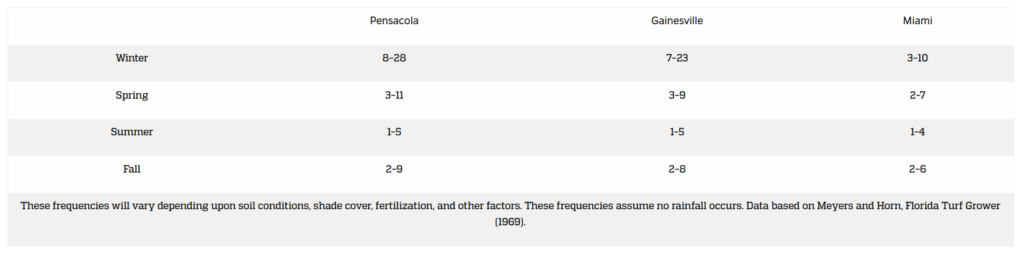
A basic rain sensor can help, but the weather-based smart system is the only way to perfectly manage these wild, seasonal swings effortlessly.
🌧️ Why Your Irrigation System is “Supplemental”
Most homeowners believe regular watering is essential, but the key word is “supplemental.”
Brevard and Indian River Counties receive a massive average of 50–60 inches of rain annually. This rainfall is a huge contributor to your lawn’s hydration needs.
Your irrigation system should be a “top-up” during dry periods, not the primary source of water. When set to a schedule, it ignores this massive natural input, meaning it’s guaranteed to keep your lawn overwatered—leading directly to all the weeds, fungus, and nutrient leaching discussed earlier.
⛔ The Damage Report: Why Rain Sensors Matter
Traditional irrigation ignores reality, leading to the false idea that a lush lawn requires constant watering. The reality is the opposite.
Overwatering your St. Augustine turf causes a host of problems:
- Shallow Roots: Constantly saturated soil stops roots from growing deep, leaving your lawn weak and vulnerable to drought and pests.
- Nutrient Leaching: Our sandy soils mean excess water instantly flushes away expensive fertilizer and chemicals, making your lawn fade fast.
- Fungal Diseases: Overly moist conditions are a breeding ground for fungus (visibly affecting lawns every October/November) like brown patch, requiring constant chemical treatments.
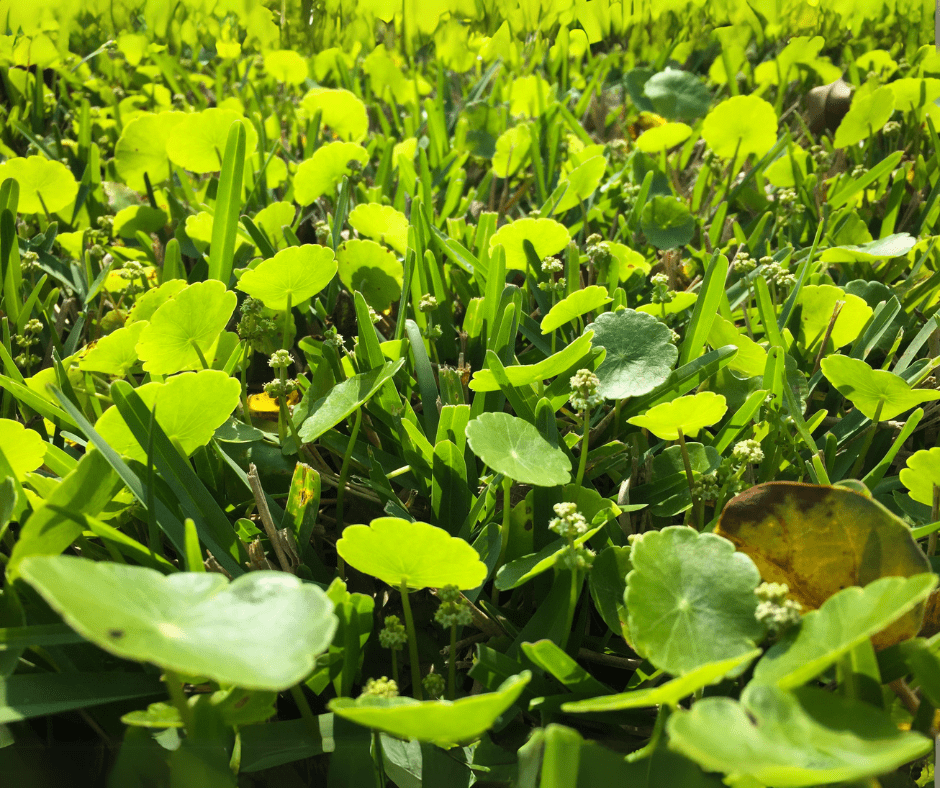
- Weed Invasion: Overwatered lawns are a haven for weeds that thrive in moisture, including year-round problems with Dollarweed, Sedge, and Crabgrass.
You cannot avoid these issues without a working rain sensor or, better yet, a smart weather-based system to ensure you water only when needed.
🧠 Watering Smarter, Not Harder: The Power of Sensors
A rain sensor is the missing link between your irrigation timer and Mother Nature. By pausing sprinklers during and after rainfall, it ensures your lawn gets only the supplemental water it needs.
Here’s how rain sensors benefit you and your lawn:
- Reduced Water Waste: Prevents unnecessary watering, saving you money.
- Deeper Roots, Stronger Lawns: By allowing slight dry periods, it forces your St. Augustine to develop deeper, resilient root systems, making your lawn naturally stronger against drought and disease.
- Healthier Lawn, Less Chemical Use: A properly watered lawn resists weed invasion naturally. Our technicians often find we only need to spot-spray 3-5 weeds (instead of broad, less-targeted applications) on these lawns. This saves you money and reduces the amount of chemicals impacting the environment.
However, in our erratic climate, a basic rain sensor is the minimum. The ultimate solution is a weather-based smart controller that completely automates this process for perfect, “as-needed” watering year-round.
💔 Environmental Impact: Protecting the Indian River Lagoon
Our beautiful Indian River Lagoon is a vital ecosystem, and lawn overwatering is directly contributing to its decline.
When you overwater, you push contaminants into the stormwater system:
- Nutrient Runoff: Excess water flushes fertilizers (Nitrogen/Phosphorus) and pesticides past the roots, carrying them into storm drains. These nutrients fuel harmful algal blooms that disrupt the ecosystem.
- Chemical Pollution: A healthy, properly watered lawn requires far less chemical treatment. Overwatering drastically increases the need for herbicides and fungicides, further increasing the chemical load.
- Seagrass & Water Quality: Herbicides can harm seagrasses just as they harm weeds, and excess nutrients/sediment degrade the water quality.
By reducing water waste with a smart system, you are immediately reducing the chemical and nutrient pollution that starves seagrass and fuels the blooms.
✅ Unleash Your Lawn’s Potential with Pest & Lawn Organic Guard
At Pest & Lawn Organic Guard, we create healthy, beautiful, and environmentally responsible lawns.
To take your turf health to the next level, ask about our Mycorrhizal Treatment service, which promotes deeper root growth and nutrient uptake—reducing the need for excessive water even further.
Contact us today to learn about our treatments and organic solutions. Let’s create a thriving lawn that’s good for you, your wallet, and the Indian River Lagoon!
Frequently Asked Questions; Rain Sensors & Why Overwatering Is Bad
How can I remember to change the frequency of irrigation?
The best way is to constantly monitor rainfall and adjust your irrigation accordingly. Since our weather patterns change constantly.
Since nobody does this, at a minimum, I recommend changing your irrigation at every time change. In conjunction with using a rain sensor.
In November change your water to once per week.
In March change your water to twice per week. We have a drought every year and sometimes you have to add days to your watering schedule. If it gets so dry that you need to water your lawn everyday then water your lawn everyday. Just don’t forget to change it back to a normal schedule when normal rain patterns return.
Why do I need a rain sensor if we get a lot of rain in Brevard and Indian River County?
Even though our area receives an average of 50-60 inches of rain annually, it doesn’t always fall consistently. Rain sensors ensure your lawn gets the right amount of water, not too much and not too little. This helps your lawn develop a deeper root system, reducing reliance on irrigation during drier periods.
Isn’t a lush lawn dependent on constant watering?
No, overwatering can actually harm your St. Augustine grass. Constant moisture weakens the root system, making it more susceptible to drought, pests, and diseases. Rain sensors prevent overwatering and encourage your lawn to develop deeper roots in search of moisture during dry spells.
What are the benefits of a deeper root system for my lawn?
Deeper roots make your lawn more resilient to drought stress, pests, and diseases. They also allow your grass to access nutrients and moisture stored deeper in the soil.
How can a rain sensor help with weeds?
Healthy lawns with robust root systems are naturally more resistant to weed invasion. By promoting deeper roots and preventing overwatering, rain sensors can help reduce weed problems.
This often allows us to use spot-spraying for weeds instead of treating the entire lawn with less-targeted weed and feed applications.
How does overwatering hurt the Indian River Lagoon?
Overwatering washes away excess nutrients and fertilizers from your lawn. This runoff can pollute the lagoon, disrupting its delicate ecosystem and contributing to harmful algal blooms.
What are some signs my lawn is being overwatered?
-Shallow root growth
-Patches of brown or yellow grass
-Increased presence of weeds like dollarweed, sedgegrass, and crabgrass
-Fungal diseases
Besides rain sensors, what else can I do to have a healthy lawn?
Consider a Mycorrhizal Treatment, which promotes deeper root growth and nutrient uptake.
Mow your lawn at the recommended height for St. Augustine or Zoysia grass.
How is overwatering my lawn detrimental to my lawn’s health similar to a person constantly over-consuming sugary drinks?
Both have similar health effects.
Both create dependence: Just like sugary drinks provide a quick burst of energy, excessive watering gives your lawn a temporary boost. However, over time, both habits make it harder for the body (or lawn) to function properly. The constant sugar intake disrupts your body’s natural ability to regulate blood sugar, and the overwatering weakens the lawn’s root system, making it reliant on external water sources.
They hinder long-term health: A diet high in sugar can lead to health problems like obesity and diabetes. Similarly, overwatering weakens the root system, making the lawn more susceptible to pests, diseases, and drought stress.
Just like a healthy human body needs a balanced diet and proper hydration, a healthy lawn needs the right amount of water to thrive. With proper watering practices and techniques like using a rain sensor, you can help your St. Augustine or Zoysia grass lawn develop a strong root system and natural resilience, just like a healthy body that functions at its best.
I already have an irrigation system. Can I add a rain sensor to it?
In most cases, yes! Many irrigation systems can be retrofitted with rain sensors.
How much does a rain sensor cost?
Under $35.00 for a basic rain sensor.
Isn’t using a rain sensor bad for my lawn in the summer when it doesn’t rain much?
Not at all! Rain sensors are designed to work with your irrigation system to provide the right amount of water, even during dry periods. The sensor will allow the system to water your lawn when needed, promoting deeper root growth that helps your lawn access moisture stored in the soil during drier times.
how can a rain sensor help to avoid root rot in the winter?
While rain sensors are fantastic for summer water conservation, they also play a crucial role in preventing root rot during winter. Florida’s winters are mild, but overwatering during this time can be detrimental. Saturated soil creates the perfect environment for fungal diseases like root rot to thrive. A rain sensor prevents overwatering by automatically pausing irrigation during and after winter rains, allowing the soil to drain properly. This helps keep the root system healthy and reduces the risk of root rot, ensuring your St. Augustine & Zoysia grass emerges vibrant and green come spring.
how can a mycorrhizal treatment help to use less water and reduce pollution to the Indian River Lagoon?
A Mycorrhizal Treatment can help reduce water usage and pollution in the Indian River Lagoon in a few key ways:
Improved Water Efficiency: Mycorrhizae are beneficial fungi that form a symbiotic relationship with plant roots. These fungi act like tiny extensions of the root system, helping plants absorb water and nutrients more efficiently. This improved efficiency means your St. Augustine grass needs less water overall to thrive.
Reduced Nutrient Runoff: Overwatering and excessive fertilization can lead to nutrient runoff from lawns. This runoff carries pollutants like nitrogen and phosphorus into storm drains, ultimately ending up in the Indian River Lagoon.
By requiring less water, Mycorrhizal Treatment helps prevent overwatering and nutrient leaching. Additionally, mycorrhizae can help plants utilize existing nutrients in the soil more effectively, further reducing the need for fertilizers and minimizing potential runoff.
Stronger Root Systems: Mycorrhizae promote deeper root growth in your lawn. These deeper roots allow your grass to access moisture stored deeper in the soil, making it more resilient during dry periods and less reliant on frequent watering. This reduces the overall amount of water needed to maintain a healthy lawn.
Improved Soil Health: Mycorrhizal fungi contribute to healthier soil by breaking down organic matter and increasing its water holding capacity. This healthier soil drains better and retains moisture more effectively, reducing the need for frequent watering and minimizing the risk of runoff.
In summary, Mycorrhizal Treatment promotes a more natural and sustainable approach to lawn care. By improving water efficiency, reducing nutrient runoff, and strengthening the root system, Mycorrhizal Treatment helps conserve water and protects the delicate ecosystem of the Indian River Lagoon.
How do you fix overwatered grass?
Halt the H2O: Stop watering your lawn completely. Allow the soil to dry out thoroughly between waterings.
Encourage Deeper Roots: Once the lawn dries, adjust your watering habits. Water deeply and infrequently, allowing the water to penetrate several inches into the soil.
This encourages roots to grow deeper in search of moisture, making your lawn more resilient in the long run.
Should I water my lawn every day?
You should not water your lawn every day. Here’s why:
Overwatering Risks: Daily watering can lead to several problems for your St. Augustine grass in Florida, including: Shallow Root Systems: Constant moisture discourages roots from growing deep, making the lawn susceptible to drought, pests, and diseases.
Nutrient Loss: Excess water washes away essential nutrients from the soil, hindering your grass’s ability to thrive and potentially requiring more frequent fertilization.
Fungal Diseases: Overly moist conditions create a breeding ground for fungal diseases.
Weed Invasion: Overwatered lawns attract weeds that thrive in damp environments.
Supplemental Watering: Brevard and Indian River Counties receive an average of 50-60 inches of rain annually. While rainfall might not be evenly distributed, it significantly contributes to your lawn’s hydration needs. An irrigation system should act as a top-up during dry periods, not a primary water source.
How Often Should I Water?
The best approach is to water deeply and infrequently, allowing the water to penetrate several inches into the soil. This encourages roots to grow deeper for better access to moisture. Here are some tips:
Observe Your Lawn: Look for signs of thirst like wilting or dry soil before watering.
Feel the Soil: Stick your finger a few inches into the soil. If it feels dry, it’s time to water.
Consider a Rain Sensor: These devices automatically pause your irrigation system during and after rainfall, preventing overwatering.
By adopting smarter watering practices, you can promote a healthier lawn, reduce water waste, and minimize any negative environmental impact on the Indian River Lagoon.
What are the basic causes for fungal issues on my St. Augusting & Zoysia Lawn?
Fungal and shallow root issues are caused by:
-Rainfall
-Excessive Irrigation
-High Himidity
https://edis.ifas.ufl.edu/publication/LH025