
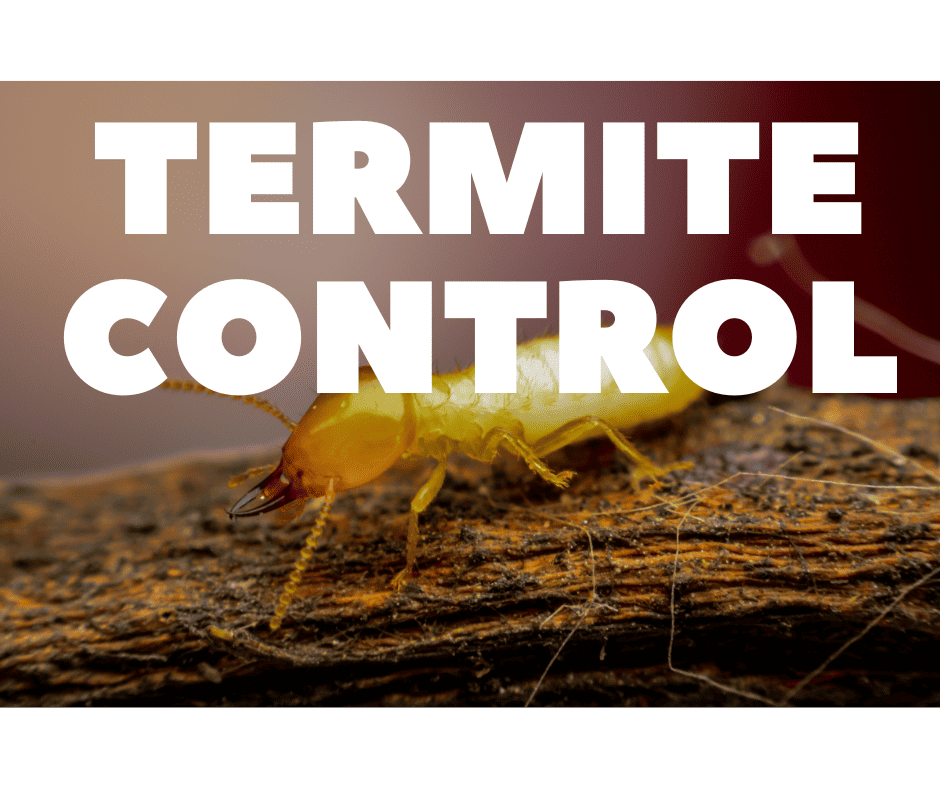
Termite control from $0.79 per sq ft. Instant pricing, $1M warranty, 25+ years experience. Veteran-owned, owner-operated. Sub-slab injection available. Call 321-704-0434.
Termite Control in Brevard and Indian River Counties
In Florida, termites are not a possibility. They are an inevitability. The question is not whether your home will face termite pressure, it is whether you are protected when it happens.
Most homeowners who call a large pest control company for termite treatment get a salesperson at the door whose job is to figure out how much they can get you to pay. The license the company operates under often belongs to someone who does not even work at that branch. The person treating your home may have been hired with minimal experience and given a few weeks of training.
That is not what happens when you call me.
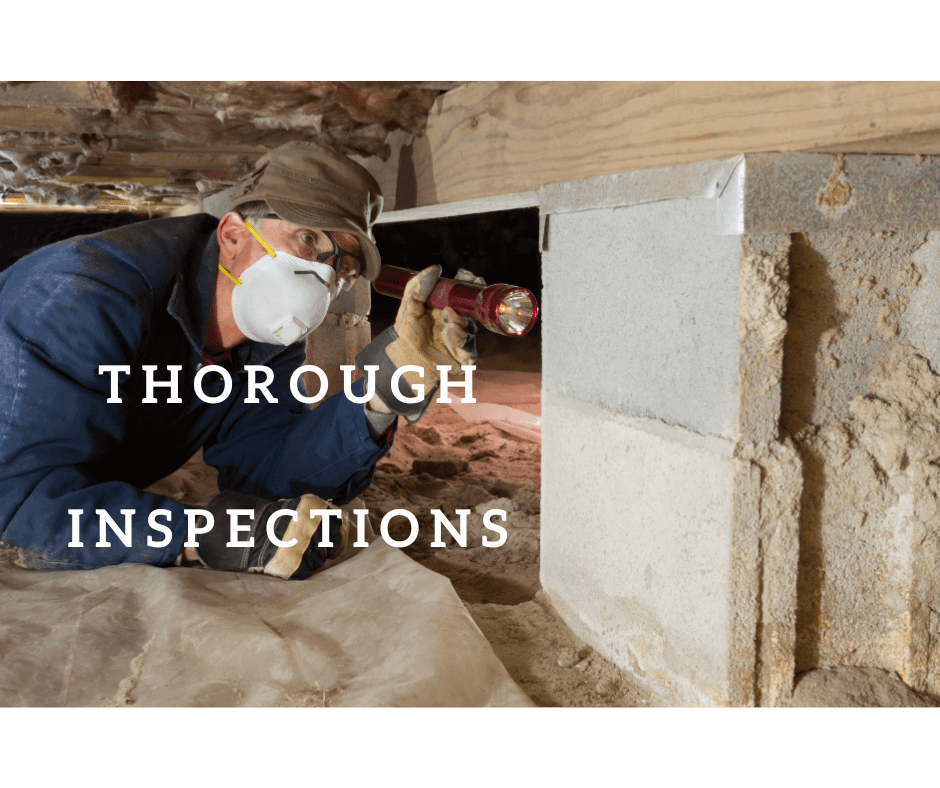
I am a licensed pest control operator and the owner of Pest & Lawn Organic Guard. I personally conduct every inspection and every treatment. I went to school for this. I completed an IPM program at Indian River State College. I spent the first decade of my career at a national pest control chain doing nothing but termite control before going independent. I have treated thousands of homes for termites across Brevard and Indian River County in the over 25 years since.
In all that time I have never filed an insurance claim for termite damage. Not once. That is not luck. That is what happens when the person doing the work cares about doing it correctly.
See your price instantly using the slider below, then book online. No salesperson, no games.
Or call or text 321-704-0434.




Book Your Termite Control Service Now!
Or call or text 321-704-0434.
Instant Online Pricing for Termite Treatment
Most termite companies will not tell you what anything costs until they have sent a salesperson to your house. That salesperson’s actual job is to size you up, figure out what you can afford, and quote you a price that matches.
I do not work that way.
The pricing slider on this page gives you the exact cost for a complete subterranean termite treatment on a monolithic slab based on your home’s square footage. Slide it to your home’s size and the number appears immediately. No phone call, no appointment, no obligation. The pricing structure is simple and consistent across every city I serve:
| Treatment Type | Price |
|---|---|
| Subterranean termite treatment, monolithic slab | $0.79 per sq ft |
| Subterranean termite treatment, supported or floating slab | $2.35 per sq ft |
| TimBor attic treatment, first 1,500 sq ft | $300 |
| TimBor each additional 500 sq ft | $50 |
| Annual warranty renewal | Starting at $265 |
| WDO report for real estate transactions | $250, or free with termite treatment |
| Termite agreement transfer to new homeowner | $50 |
Warranties include re-treatment and repair guarantees up to $1,000,000. Seniors and active military receive 10% off.
The price you see is the price you pay. If your home has something unusual that requires additional work, an active interior infestation, severe drainage issues that need foam treatment, or a buried-wood condition that needs sub-slab work, I will tell you before anything starts and give you a clear price for it.

Why You Get Better Termite Control From an Owner-Operator
This matters more than most homeowners realize, and it is worth being direct about.
At large pest control companies, the license that legally allows the company to operate often belongs to someone who does not work at your local branch. The state license requires very few hours of supervised work to maintain, which means a single licensed person can legally cover treatments performed by many technicians who have minimal training. The technician at your door may have been hired with no pest control experience and trained over a few weeks before being put in front of customers. They have no personal accountability for the result. If something goes wrong years from now, they are gone and a different person is at your door dealing with the warranty claim.
Termite work is technical. The difference between a treatment that works and a treatment that just looks like it is being done is often invisible until termites are eating your house. By the time you find out the work was bad, the damage is already significant and the technician who did the work has moved on.
When you hire me, you get the licensed owner-operator who personally treated thousands of homes during the first decade of my career when I worked at a national chain doing nothing but termite control, and thousands more in the over 15 years since I went independent. I do the inspection. I do the trenching. I do every part of the treatment personally. If something goes wrong years from now, you are not bouncing between a call center and whoever the local branch employs that week. You text me and I handle it.
In over 25 years of treating homes I have never filed an insurance claim for termite damage. That is what happens when the work gets done right the first time, by the person who is accountable for it.
Types of Termites in Brevard and Indian River County
Subterranean Termites
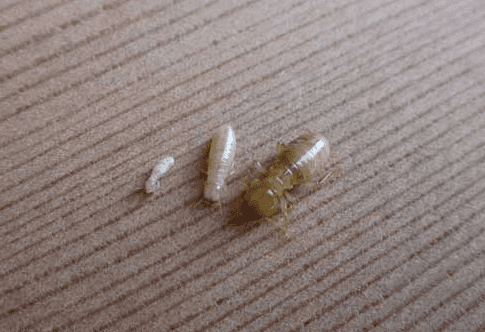
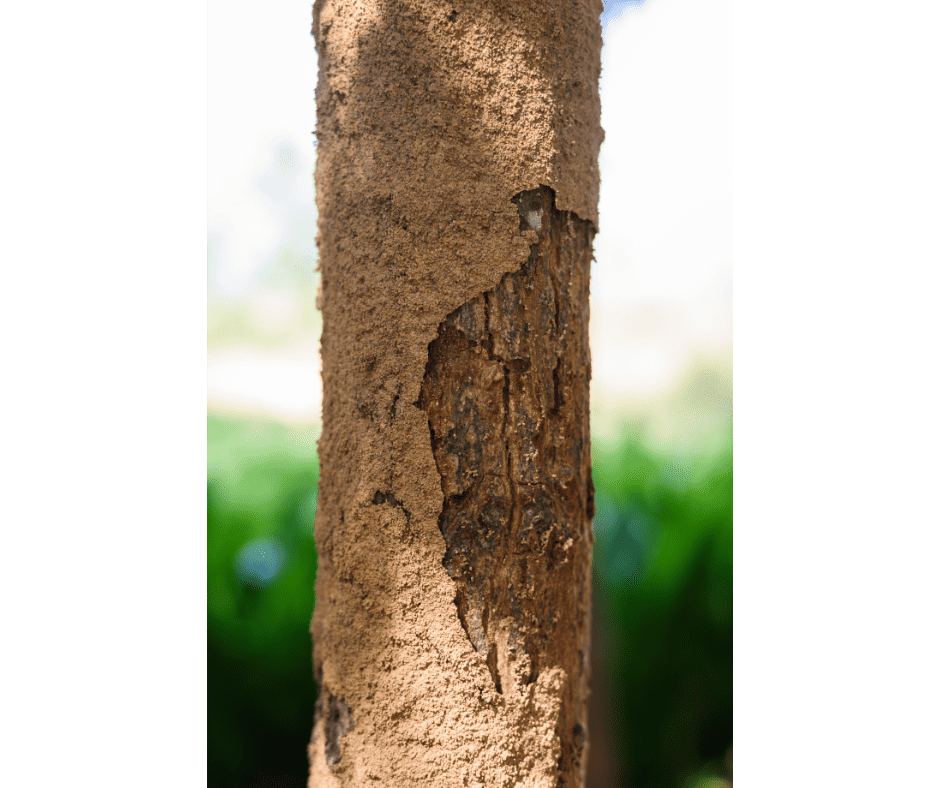
Subterranean termites are the most common and most destructive termites in Florida. They live in massive underground colonies and travel to your home through mud tubes, which are pencil-sized tunnels built from soil and wood particles along your foundation walls. A single colony can span multiple acres and infest multiple homes simultaneously.
Their favorite food is slash pine, but they will feed on oak, maple, and virtually any other wood in your home. Subterranean termites are active year-round in Florida with no winter dormancy. Eastern subterranean termites swarm from November through May. Formosan termites, which are larger and more aggressive, swarm from March through June, typically at night.
Subterranean termites are by far the most likely cause of significant termite damage to your home, and they are the species the primary subterranean treatment is designed to stop.
Drywood Termites
Drywood termites do not need contact with soil. They infest dry wood directly, which means they can enter through gaps in your roofline, soffits, and eaves and establish colonies in your attic trusses without ever touching the ground. They are slower to cause damage than subterranean termites but are genuinely destructive if left untreated, particularly in older homes where colonies have had decades to expand.
Drywood termites swarm from May through September during warm, humid conditions. The swarmers fly to your home, find a small gap, and establish a colony in attic lumber or wall framing.
The TimBor attic borate treatment I include as a $300 add-on is the most effective drywood termite protection available, and it is genuinely remarkable in how it works. More on that below.
Dampwood Termites
Dampwood termites require continuously wet wood and are rarely a structural problem unless there is a serious ongoing moisture issue like a long-term roof leak. If dampwood termites are present in your home, fixing the moisture source is the first and most important step. They are not generally the species you need to worry about as a primary concern, but their presence usually indicates a moisture problem that does need to be addressed.
How I Treat Subterranean Termites
The Standard Trench and Treat Method
This is the foundation of effective subterranean termite control and how the majority of homes get treated.
I start by moving items away from the foundation, plants, hoses, anything that would be in the way of doing the work properly. I then dig a shallow trench in the soil around the entire perimeter of the home, exposing the soil at the base of the foundation wall. A long-lasting professional-grade termiticide is applied directly to the exposed soil and the foundation wall itself. As I replace the soil, I treat the backfill so the termiticide is distributed throughout the soil column rather than just sitting at the surface.
The result is a continuous termiticide barrier in the soil around your home that subterranean termites cannot cross. The termiticide I use is what is called a non-repellent, which is important. Termites cannot detect it. They tunnel through it normally, get exposed to it, and carry it back to the colony where it spreads. The colony itself collapses, not just the individual termites that came in contact with the barrier.
A properly applied subterranean treatment is designed to provide over a decade of protection even without an ongoing warranty.
Wall Void Injection for Interior Issues
When termites have already established themselves inside the home, through a slab crack, around a plumbing penetration, or in an area the original treatment did not reach, I have a specialized wall void injection needle that lets me treat inside walls with precision.
The traditional approach involved extensive drilling along baseboards. The injection needle lets me treat through a single pinhole at the top of a baseboard, which I then fill with drywall spackle when the work is done. The hole is essentially invisible afterward and the wall void inside is fully treated. Far less invasive than the old approach and far less disruptive to your home.
Sub-Slab Injection for Difficult Conditions
This is one of the things I do that most termite companies in this area cannot match.
Some homes have conditions that make standard surface trenching insufficient. Cracks in the slab that go to the interior of the home. Additions where new construction meets old, creating junction points that surface treatment around the perimeter does not address. Foundation settling that has produced voids underneath the slab. Drainage erosion from decades without effective gutters that has compromised the soil conditions on which the barrier depends.
For all of these situations I have sub-slab injection equipment that delivers termiticide directly underneath the slab through small carefully placed drill holes. The drill holes are filled with concrete or grout after treatment and are barely visible. The treatment reaches soil and underground areas that surface trenching cannot, which is the only way to handle these conditions properly.
Termiticide-Infused Foam Treatment
For the most challenging cases, particularly homes with significant soil voids or underground cavities, I use termiticide-infused foam treatment.
This is something genuinely few termite companies in this area offer. Liquid termiticide injected into a void runs through and pools in the lowest point, leaving most of the void untreated. Foam expands to fill the entire cavity completely and stays there working as a barrier. For homes where drainage erosion has created actual underground voids beneath the foundation, this is the only treatment that provides reliable coverage.
I learned to use this equipment and the conditions that require it during my years at the national chain doing nothing but termite work. Most pest control technicians have never seen these conditions or used this equipment. For older Brevard County homes with foundation issues, this is often the difference between treatment that works and treatment that does not.
TimBor Attic Treatment for Drywood Termites
This is the add-on that most homeowners have never heard of, and it is genuinely one of the most impressive treatments available in pest control.
For just $300 added to your subterranean treatment ($300 for the first 1,500 square feet of attic, $50 for each additional 500 square feet), I apply TimBor borate to the lumber in your attic. The application is a light spray, almost to the point of runoff, that coats the wood surfaces. The borate soaks into the wood, and over the following couple of years it distributes throughout the lumber via the wood’s natural moisture content.
What you get from that single application is wood that is permanently impervious to termites for the life of the wood. Over 100 years of protection. Drywood termites that try to feed on treated wood die before they can establish a colony. Existing colonies hiding in the lumber are eliminated as the borate distributes. New colonies cannot get a foothold because the wood itself is no longer suitable for termite life.
The reason this works is that borate is a mineral compound, not an insecticide that breaks down over time. Once it is in the wood, it stays there. The wood essentially becomes inhospitable to termites at a chemical level and remains that way as long as the lumber does not get continuously soaked and leached out, which in a normal attic environment does not happen.
Combined with the subterranean soil treatment around your foundation, the attic borate gives your home complete termite protection from below and above. Subterranean termites cannot cross the barrier in the soil. Drywood termites cannot establish in the attic lumber. The two together are the closest thing to permanent termite protection available in the industry, and the $300 add-on is one of the best investments any Florida homeowner can make.
What Attracts Termites to Your Home
After over 25 years of inspecting homes across this area, I know exactly what conditions put a home at risk. These are the most common problems I see.
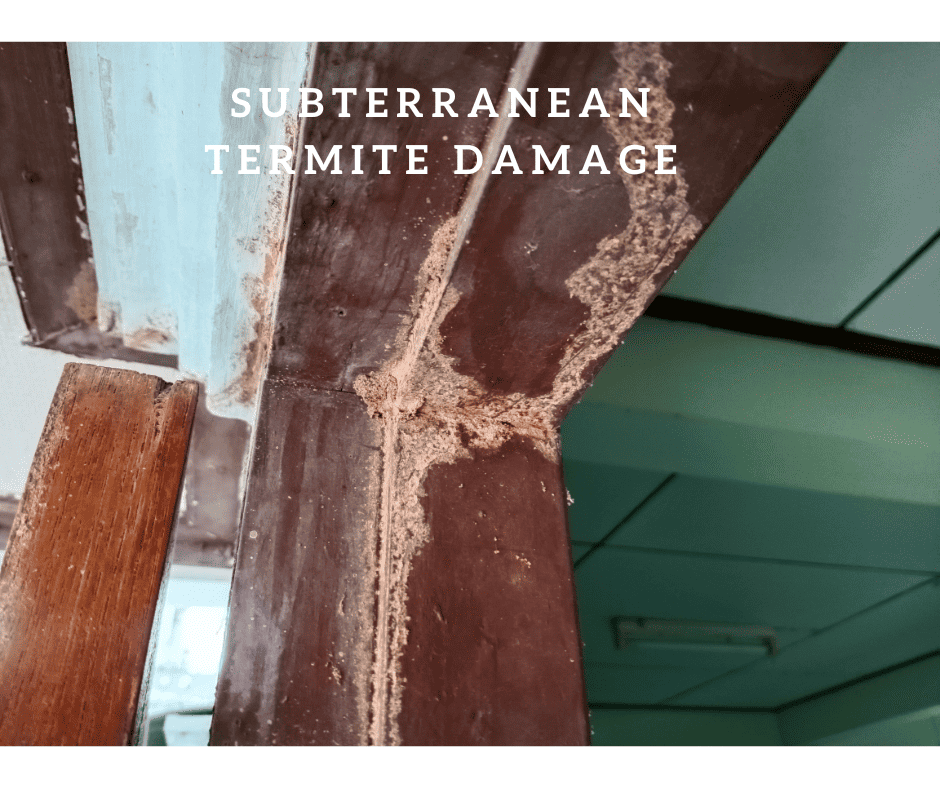
- Wood-to-soil contact is the single most common cause of subterranean termite infestation. Any wood that touches the ground, whether it is siding, deck framing, a porch post, or landscaping timber, is a direct highway into your home. Even pressure-treated wood gives way eventually.
- Moisture around the foundation is what subterranean termites need to survive. A dripping AC drain line running against the foundation, pooling water from gutters that are not draining properly, or overwatered landscaping all create the conditions termites depend on. Getting AC runoff away from the foundation with a splash block or PVC extension is one of the simplest and most effective things any homeowner can do.
- Lack of gutters is a real issue I see in Palm Bay, Sebastian, and parts of West Melbourne in particular. Homes that have gone for decades without effective gutters often have soil erosion at the foundation that has created voids or even small sinkholes underneath the slab. Those conditions both attract termite activity and make standard treatment less effective. Foundation damage from drainage erosion is generally not covered by homeowners insurance, which is another reason to address gutters as a priority on any home without them.
- Pine bark mulch is essentially termite food. Every single time I flip a handful of pine bark mulch near a home I find active subterranean termites. It is a running joke in the industry. Use cypress, melaleuca, or cedar mulch near the foundation instead.
- Firewood and stumps stored near the structure give termites a food source and a staging ground right at your doorstep. Store firewood at least 20 feet from the home and elevated off the ground.
- Buried slash pine from lot clearing is a major termite driver in Palm Bay and parts of West Melbourne and Sebastian. When lots were cleared for construction over the decades, slash pine stumps and root systems were often buried rather than fully removed. Decomposing slash pine underground is a primary food source for Eastern subterranean termites, and colonies feeding on buried wood can sustain themselves for years before any activity shows up inside the home.
- Cracks in the slab allow termites to bypass the treatment barrier entirely. Sealing visible cracks reduces entry points significantly.
- Stucco below grade allows termites to travel behind it undetected. Stucco should end at least six inches above soil level.
- Gaps in soffits are the primary entry point for drywood termite swarmers. Keeping soffits sealed and in good repair is the most effective drywood termite prevention available short of the TimBor treatment.
- Rigid foam insulation below grade creates hidden pathways termites can use to enter the home undetected. If foam insulation extends below the soil line, it is a known issue worth addressing.
Signs You Have Termites
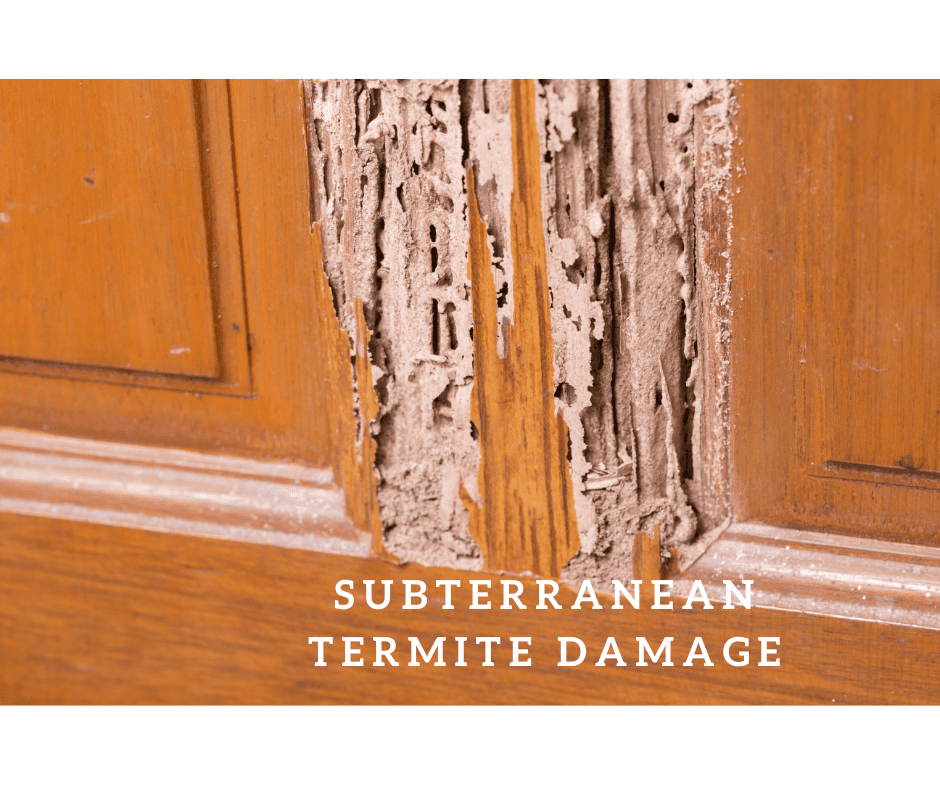
Termites work from the inside out, causing damage long before most people notice anything. After two decades of inspections, I can often smell an active termite problem the moment I walk through the door. Termites have a distinct musty odor, similar to mold but with a specific quality that comes from their waste and the wood they are consuming. Once my nose tells me they are there, finding them is just a matter of looking.
The signs to watch for:
- Mud tubes on foundation walls, floor joists, or anywhere soil meets wood are the clearest indicator of subterranean termite activity. They look like pencil-sized tunnels made of soil running up from the ground along concrete or wood surfaces. They are protective travel routes the termites use to move between the soil and the wood they are eating.
- Discarded wings on windowsills, in spiderwebs, or near doors mean a nearby colony has swarmed and reproductive termites are looking to establish new colonies. The wings are translucent and shed in piles. Finding them inside the home is a serious sign because it means swarmers got inside.
- Hollow-sounding wood when you tap on door frames, baseboards, or walls indicates termites have consumed the interior while leaving the surface intact. Tap on different sections of trim and listen for a consistent sound. A hollow or papery sound where solid wood should be is a warning sign.
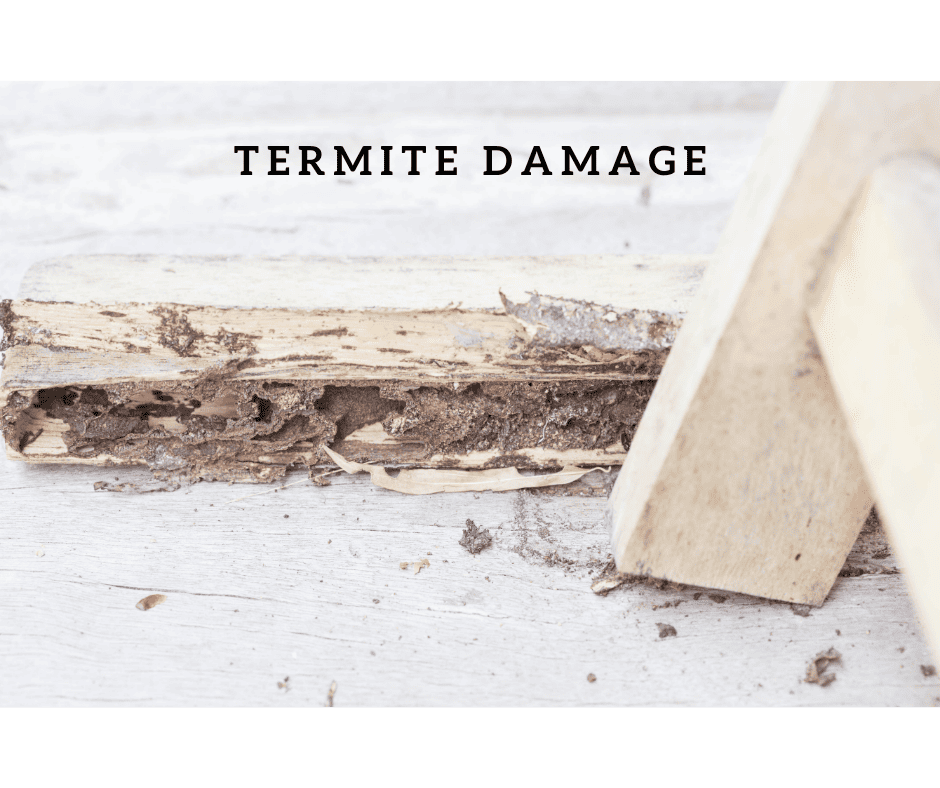
- Frass is the small sand-like pellet droppings left by drywood termites, typically found on floors or surfaces below an infested piece of wood. The pellets are uniform in size and shape, often described as looking like coarse coffee grounds or small wood pellets.
- Mud streaks on drywall indicate subterranean termites are active behind the wall and have been there long enough to leave visible trails.
- Doors and windows that suddenly stick can be a sign of termite damage that has weakened the framing around the opening, causing the structure to settle slightly.
- A distinct musty odor in any area of the home, particularly one without obvious moisture issues, can indicate active termite activity. After 25 years I can often identify this before any physical signs are visible.
If you see any of these, do not wait. The damage compounds quickly once a colony is established and the difference between catching it early and catching it late is often thousands of dollars in repair costs.
Florida Foundation Types and How They Affect Treatment
The type of foundation your home has determines both the treatment approach and the cost.
- Monolithic slab is the most common foundation in Florida. It is a single continuous pour of concrete that forms both the floor and the footings in one operation. Cost-effective to build, but cracks that develop over time create entry points for termites. Treatment involves trenching and applying termiticide around the full perimeter. Pricing is $0.79 per square foot.
- Supported slab sits on piers, beams, or concrete blocks rather than directly on the ground. Common in larger custom homes, oceanfront properties, and homes built in areas with poor soil. Because there is a void between the ground and the slab, both sides must be treated to create a complete barrier. This requires significantly more labor and is priced at $2.35 per square foot.
- Floating slab is a slab poured separately from the main foundation, most commonly used for porches, patios, additions, or in areas with unstable soil. The separation from the main structure creates additional entry points that need to be addressed as part of a complete treatment. Same pricing as supported slabs at $2.35 per square foot.
- Crawlspace homes are uncommon in Brevard and Indian River County but exist, particularly in some older downtown Vero Beach neighborhoods. Crawlspace homes have wood framing accessible from underneath the home, which requires a different inspection and treatment approach than slab construction. The treatment is more involved because there is more exposed wood to examine and protect.
If you are not sure what type of foundation your home has, give me a call. I can determine it during a free inspection.
The Annual Warranty
My termite warranty renews annually starting at $265. Every renewal includes a personal inspection by me and a booster treatment of termiticide applied to the soil around your foundation.
That booster treatment is something most termite companies do not include. Conditions around your home change over time. Landscaping matures and shifts soil contours. Settling can affect the foundation. Drainage patterns change as gutters age. Each of these can affect the integrity of the original termiticide barrier. The annual booster maintains the barrier as those changes occur, which is significantly more effective than just inspecting and hoping the original treatment is still intact.
If termites breach the barrier during the warranty period, retreatment is covered at no cost. Repair coverage up to $1,000,000 is included if termite damage occurs while the warranty is active.
If you sell the home, the agreement transfers to the new homeowner for $50. This is actually a real asset when listing a home. A transferable termite warranty signals to buyers that the home has been professionally protected and reduces their risk in the purchase, which can affect both the sale itself and the price.
Termite Prevention Worth Doing
Beyond the professional treatment and warranty, there are real things homeowners can do to reduce termite risk.
- Address moisture around the foundation. Get AC drain lines extended away from the house with a splash block or PVC extension. Make sure gutters are clean and downspouts direct water at least three to four feet away from the foundation. Fix plumbing leaks promptly. Repair roof leaks as soon as you notice them.
- Use the right mulch. Cypress, melaleuca, or cedar mulch near the foundation. Avoid pine bark mulch entirely. Keep mulch at least six to twelve inches away from the foundation regardless of what type you use.
- Maintain wood-to-soil separation. Make sure no wood elements of the home, deck, fence, or landscaping touch the ground directly. Anything wooden should sit on a non-wood barrier.
- Seal what you can. Foundation cracks, soffit gaps, and entry points around plumbing or utility penetrations are all worth sealing as you find them.
- Keep stucco above grade. Stucco that extends below the soil line is a known termite issue. It should end at least six inches above the soil.
- Store firewood and lumber properly. At least 20 feet from the house, elevated off the ground on a rack.
- Schedule annual inspections. This is what the warranty includes. Catching termite activity early is the difference between a manageable treatment and significant structural damage.
Our Termite Control Service Areas:
Termite Control FAQ
Pest & Lawn Organic Guard | Brevard & Indian River County
General Termite Questions
Are termites really that common in Florida?
Yes, and it is not a matter of if, it is when. Subterranean termites are foraging constantly from underground colonies that can span multiple properties. Every time I flip a handful of pine bark mulch near a home I find active subterranean termites. Even concrete block homes are full of wood framing and trusses that are very much on the menu. Termites are active year-round here with no winter to slow them down.
What are the signs of termites in my home?
The most common signs are mud tubes on foundation walls or floor joists, discarded wings on windowsills or near doors after a swarm, hollow-sounding wood when you tap on baseboards or door frames, frass which are small granular pellets left by drywood termites near infested wood, and mud streaks on drywall from subterranean termites active behind the wall. Termites also have a distinct musty odor. After over 20 years of inspections I can often smell an active infestation before I see any physical signs.
What is the difference between swarming termites and ants?
Look at the waist and the antennae. Termites have a thick uniform body with no visible waist and straight bead-like antennae. Carpenter ants have a distinct narrow waist and elbowed antennae. Termite swarms are typically larger and more coordinated. Ant swarms are smaller and more erratic. If you find discarded wings and are not sure which one you are dealing with, text me a photo at 321-704-0434 and I will tell you.
Can one termite colony infest multiple homes?
Yes. A single subterranean termite colony can forage across a surprisingly large area and infest several homes simultaneously.
When do termites swarm in Florida?
Eastern subterranean termites swarm from November through May, typically triggered by warm weather and rain. Formosan termites swarm from March through June, usually at night. Drywood termites swarm from May through September during warm, humid conditions.
Can you smell termites?
I can. After over 20 years of inspections my nose is trained to detect the specific musty odor that comes from termite waste and the wood they are consuming. It is similar to mold but distinct enough that I can often identify an active infestation the moment I walk through the door. Finding them after that is just a matter of looking in the right places.
Does homeowners insurance cover termite damage?
No. Termite damage is explicitly excluded from standard homeowners insurance policies. A termite warranty is the only financial protection available for termite damage, which is why maintaining an active agreement matters.
About the Treatment
What makes your termite treatment different from a big company?
The person treating your home is the licensed owner-operator who went to school for this and has been doing it for over 20 years. At large pest control companies, the license the branch operates under often belongs to someone who does not even work there. The technician sent to your home may have minimal training and no personal accountability for the outcome. With me, the person who shows up is the same person responsible for the results. In over 20 years I have never filed an insurance claim for termite damage. That is what happens when the person doing the work cares about getting it right.
How do you treat subterranean termites?
I use the trench and treat method. I move items away from the foundation, trench the soil at the base, apply a long-lasting professional-grade termiticide to the exposed soil and foundation, and treat the backfill as I replace it. This creates a complete barrier around the home. For interior situations I use a specialized wall void injection needle to treat inside walls with precision, often through a pinhole at the top of a baseboard that I fill with drywall spackle afterward. You will barely know it was done.
How do you treat drywood termites?
I treat drywood termites with TimBor, a borate-based product applied directly to attic wood and trusses. TimBor penetrates the wood and makes it permanently impervious to termites for the life of the wood as long as it stays dry. I treat the entire attic space, every truss and beam, creating a comprehensive drywood termite barrier above the living space.
What is the wall void injection needle?
It is a specialized tool that lets me inject termiticide directly into wall voids through a very small opening, often a pinhole at the top of a baseboard that I fill with drywall spackle when I am done. This is far more precise and far less visible than the extensive drilling that used to be standard practice.
How long does a termite treatment last?
A properly applied subterranean soil treatment is designed to provide over a decade of protection even without an ongoing warranty. TimBor attic treatment protects the wood for its entire lifespan as long as it remains dry. With an active warranty I also apply a booster treatment at each annual renewal to maintain the barrier as conditions around the home change over time.
What if I see termites swarming after treatment?
Swarming after treatment can happen and is often a sign of a dying colony making a final reproductive effort. Depending on the product used, swarming should subside within two to four weeks. If you see continued swarming after that timeframe, contact me directly. There could be an untreated area such as a hidden slab crack or a moisture source like a leaking shower drain that is sustaining the colony. I will investigate and address it.
Pricing and Warranties
How much does termite treatment cost?
Subterranean termite treatment on a monolithic slab is $0.79 per square foot. Supported or floating slabs are $2.35 per square foot due to the additional labor required. Use the pricing slider on this page to see your exact cost in seconds.
What does the warranty cover?
The warranty covers re-treatment if termites breach the barrier and repair costs up to $1,000,000 if termite damage occurs while the warranty is active. Annual renewal starts at $265 and includes a personal inspection and booster treatment.
How often should I have my home inspected for termites?
Annually. A full retreatment is recommended every five years. The annual booster treatment included in my warranty renewal maintains the barrier between full treatments.
Does my termite agreement transfer if I sell my home?
Yes. The agreement transfers to the new homeowner for $50.
Prevention
What is the most important thing I can do to prevent termites?
Eliminate moisture around the foundation. A dripping AC drain against the foundation, pooling water from gutters, or overwatered landscaping all create the conditions subterranean termites need. Use a splash block to direct AC runoff away from the house. Keep gutters clean and downspouts draining away from the structure. Fix any roof or plumbing leaks promptly.
What mulch should I use near the foundation?
Avoid pine bark mulch entirely near the foundation. It is essentially termite food. Use cypress, melaleuca, or cedar mulch instead.
How can I prevent drywood termites?
Keep soffits sealed and in good repair. Drywood termite swarmers enter through gaps in rooflines, soffits, and eaves. Sealing those gaps is the most effective prevention available. A TimBor attic treatment provides permanent protection if swarmers do get in.
Real Estate and New Construction
Do you provide WDO reports for home purchases?
Yes. WDO reports are $250 or free when combined with a termite treatment. I can coordinate timing to keep your closing on track and provide all documentation lenders require.
Do new homes need termite treatment?
Yes. Drywood termites can arrive with the lumber used in construction. Most Florida building codes require preconstruction termite treatment. A borate treatment applied at the dry-in stage protects the framing from the day it goes up and is the most comprehensive new construction protection available.
Should I buy a home that has been treated for termites?
Yes. A history of professional treatment is a positive sign. Look for stickers on the breaker box or attic trusses indicating past treatments. What matters most is whether an active warranty is in place and whether the original treatment was done correctly.